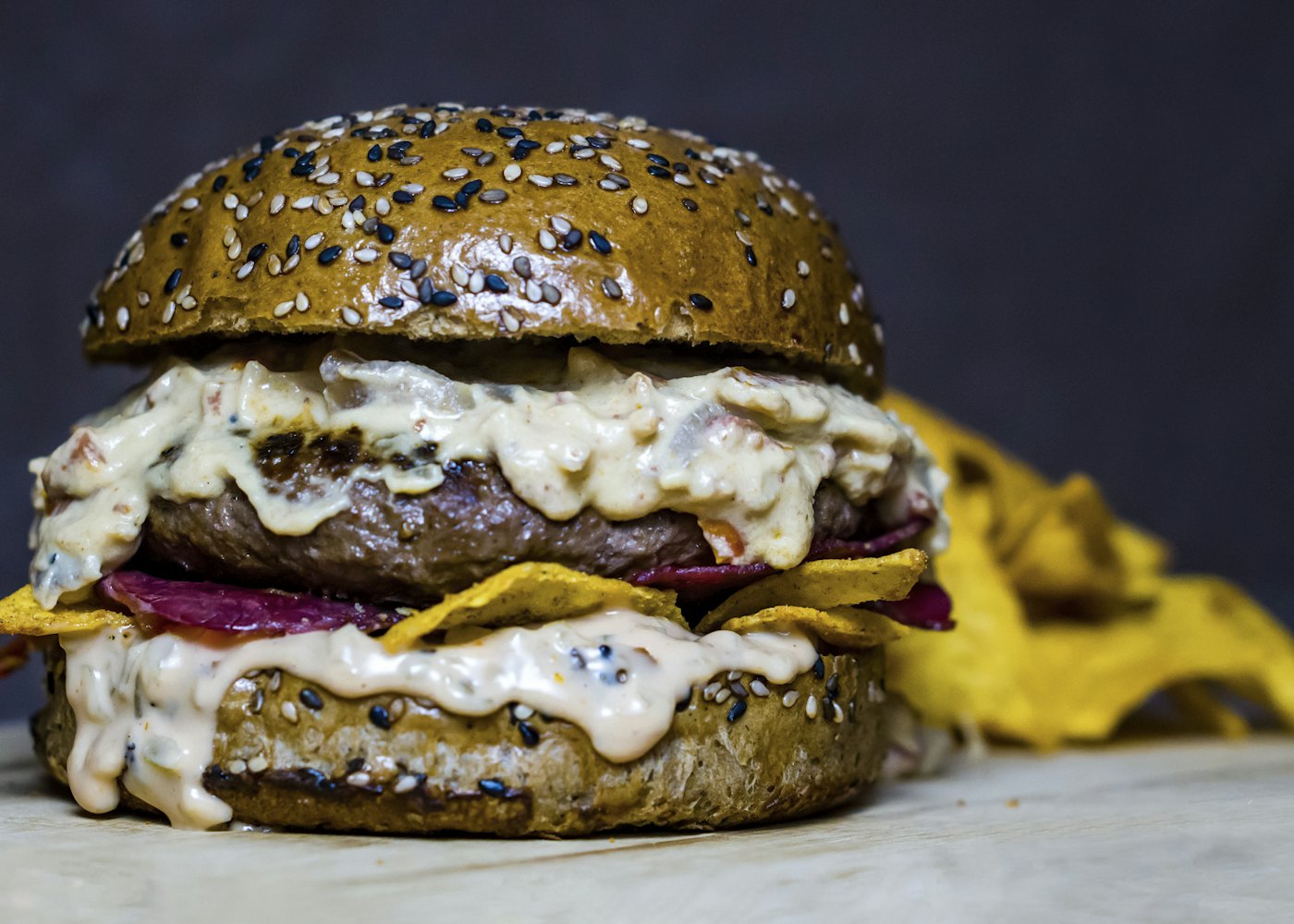
The best cheese for burgers is American for the smoothest melt, cheddar for the most flavor, and Swiss, pepper jack or blue cheese when you want to match specific toppings. The right cheese depends on the burger: some cheeses melt into a smooth, glossy layer, while others bring sharp flavor but turn greasy or rubbery. Here's how the most popular choices compare.
Why some cheeses melt better than others
Melting comes down to moisture, age and how the proteins and fat are held together. Younger, higher-moisture cheeses soften quickly and stay smooth. As cheese ages, it loses moisture and its protein structure tightens, so aged cheeses are more likely to separate into oil and clumps when heated. Processed cheeses like American are made with emulsifying salts, such as sodium citrate or sodium phosphate, that keep the fat and proteins bound together, which is why they melt so evenly.
- Best melters: American, young cheddar, Monterey Jack, pepper jack, Muenster, provolone, Swiss, Gruyère, fontina, young gouda.
- Good flavor, trickier melt: aged cheddar, aged gouda, Parmesan-style cheeses.
- Don't really melt (use crumbled or spread): blue cheese, feta, goat cheese.
American
The classic for a reason. American cheese is processed to melt smoothly without separating, which makes it the standard choice for smash burgers and diner-style cheeseburgers. Its mild, salty flavor complements beef without competing with it. Deli-counter American comes in thicker slices and many people find it richer in flavor than individually wrapped singles.
Cheddar
Sharp cheddar adds much more flavor, but aged cheddar can turn oily when melted. Choose a younger, mild or medium cheddar for a better melt, or slice it thin. Cheddar is the natural partner for bacon, barbecue sauce and caramelized onions, and it's a great choice for a classic backyard cheeseburger.
Swiss and Gruyère
Mild, nutty and great melters. They're the natural partner for mushrooms, as in our Mushroom Swiss Burger. Gruyère is richer and more complex than everyday Swiss and works well on upscale burgers with caramelized onions.
Pepper jack and Monterey Jack
Monterey Jack is mild, buttery and one of the most reliable melters. Pepper jack is Monterey Jack with chile peppers; it melts well and adds gentle heat. Pair it with jalapeños or chipotle mayo, or with roasted chiles on a green chile cheeseburger.
Blue cheese
Strong and tangy. Crumble it on top rather than expecting it to melt into a sheet, and balance it with something sweet like caramelized onions. Blue cheese also pairs well with bacon, arugula and a little hot sauce.
More cheeses worth trying
- Provolone: mild or sharp, melts smoothly and stretches. Great with Italian-style toppings like roasted peppers or pesto.
- Muenster: very mild and creamy with excellent melting; a good alternative to American if you prefer a natural cheese.
- Gouda and smoked gouda: young gouda melts well; smoked gouda adds a smoky note that suits barbecue sauce and bacon.
- Fontina: nutty, creamy and a superb melter. Good with mushrooms and truffle-style flavors.
- Fresh mozzarella: soft and milky; it melts but releases moisture, so slice it thin and pat it dry.
- Goat cheese: tangy and creamy. Spread or crumble it, and pair it with arugula, figs or onion jam.
- Brie: rich and buttery; it softens more than it melts. Slice it thin and pair with something sweet or tart.
- Colby and Colby Jack: mild, soft and melt easily; kid-friendly and good on simple cheeseburgers.
Matching cheese to burger style
- Smash burgers: American, nearly always. It melts in seconds over a thin patty.
- Thick grilled burgers: cheddar, pepper jack, Swiss or provolone.
- Stuffed burgers: American or a mix of American and cheddar, which melts into a molten center; see our Juicy Lucy.
- Butter burgers: mild American or a young cheddar, as with our Wisconsin butter burger.
- Turkey and veggie burgers: pepper jack, Muenster, Swiss or goat cheese to add richness to leaner patties.
How much cheese per burger
One slice is enough for a standard 4-ounce patty; two slices suit thicker burgers or doubles. Slices should cover most of the patty without drooping far over the edge. For crumbled cheeses like blue or goat cheese, about a tablespoon or two per burger is plenty, since their flavor is strong.
Tips for a perfect melt
- Add the cheese in the last minute of cooking, after flipping, so it melts as the burger finishes.
- Bring cheese out of the fridge a few minutes early; cold, thick slices melt slowly.
- Slice cheese thin, or shred it, for faster, more even melting.
- Cover the pan or close the grill lid to trap heat.
- On a griddle, add a splash of water next to the patty and cover it to steam the cheese. A cheese melting dome is the diner trick for this: it melts cheese evenly in about 20 seconds. We compare it to the lid you already own in cheese melting dome vs. pan lid.
- Don't let melting time push the burger past done. Ground beef should reach 160°F (71°C), the USDA safe minimum, and lower temperatures are a personal risk choice. Check with a thermometer and see our burger temperature guide.
Frequently asked questions
What cheese melts best on a burger?
American cheese melts the most smoothly because emulsifying salts keep it from separating. Among natural cheeses, Monterey Jack, young cheddar, Muenster, provolone and Swiss all melt well.
Why does my cheddar get greasy when it melts?
Aged cheddar has less moisture and a tighter protein structure, so its fat tends to separate when heated. Use a younger mild or medium cheddar, slice it thin, and melt it gently under a cover.
When should I put cheese on a burger?
Add it after you flip the patty, during roughly the last minute of cooking, then cover the burger so the trapped heat melts the cheese evenly.
Can you mix cheeses on one burger?
Yes. A slice of American with a sharper cheese like cheddar or Gruyère gives you both a smooth melt and more flavor.
Hungry for more?
Find great burgers near you or cook one tonight.