As an Amazon Associate, PlanetBurger earns from qualifying purchases.
Both carbon steel and cast iron make an excellent burger crust, so you can't go badly wrong. Choose cast iron if you want the most affordable pan, cook mostly indoors and make two to four patties at a time; choose a carbon steel griddle if you cook for a crowd, want a flat-top surface, or want to move one pan between your stove and grill.
Quick picks
- Best budget pick: Lodge Cast Iron Skillet. Comes pre-seasoned, is very durable and is easy to find. More about it.
- Best for batches: Made In Carbon Steel Griddle. A pre-seasoned flat-top that Made In lists as compatible with gas, electric and induction cooktops and with grills. More about it.
Why burgers need heavy, uncoated metal
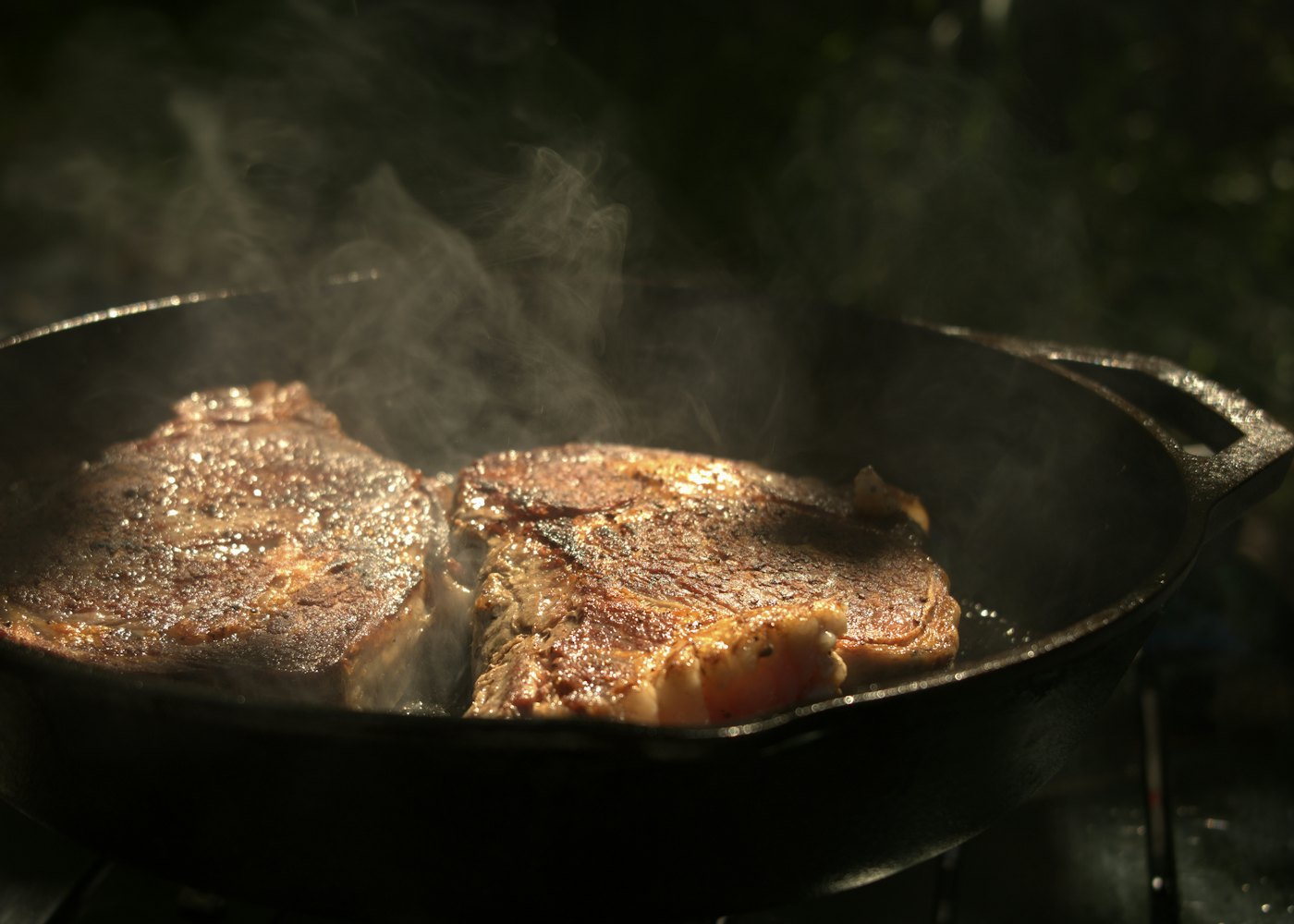
A great burger crust comes from the Maillard reaction, and that needs a very hot surface that stays hot when cold beef lands on it. Nonstick pans aren't designed for the high, sustained heat smash burgers demand, and thin aluminum or stainless pans lose heat quickly. Cast iron and carbon steel both handle high heat, both build up a natural seasoning, and both release a well-seared patty once the crust has formed.
The quick comparison
- What it's made of: Both are iron and carbon. Cast iron has more carbon and is poured into a mold as one thick piece; carbon steel has less and is formed from thinner sheet metal.
- Heat-up speed: Carbon steel heats and cools faster. Cast iron takes longer to come up to temperature.
- Heat retention: Cast iron holds heat better once it's hot, which helps when you add several cold patties at once.
- Weight: Carbon steel is lighter for its size.
- Surface: Carbon steel is smoother; cast iron is a bit rougher, which helps seasoning grip.
- Care: Nearly identical: hand wash, dry right away, oil lightly.
- Price: Basic cast iron skillets are generally the less expensive way in.
How they compare for burgers
Heat and crust
Cast iron's mass is its superpower. Preheat it well and it stays hot through a round of patties, giving you a deep, even sear. Carbon steel responds faster when you adjust the burner, which helps when you want to drop the heat for onions or toasting buns. For smash burgers, both get more than hot enough; just give either one a thorough preheat.
Size and shape
Most cast iron skillets are round with sloped or straight sides. A 10- to 12-inch skillet fits about two smash patties comfortably, or two or three thicker burgers. A rectangular carbon steel griddle is flat and designed to sit across two burners, so it fits a full batch with room left to toast buns or cook onions. That's the big reason to choose one: it turns your stove into a small flat-top.
Weight and handling
Carbon steel is easier to carry to the grill, lift to drain grease, or hang on a hook. A large cast iron skillet is heavy, especially when it's full and hot, so plan to use both hands and a helper handle.
Versatility
Both go from stovetop to grill. A cast iron skillet's sides make it better for shallow frying and pan sauces. A griddle is better for anything you want to spread out: pancakes, fried eggs, smash burgers by the half-dozen.
Who should buy which
Choose cast iron if you:
- Want the most budget-friendly route to a great crust
- Usually cook for one to three people
- Want one pan that also handles frying, searing and baking
- Don't mind extra weight
Choose carbon steel if you:
- Regularly cook for a family or a crowd
- Want a flat-top experience on a regular stove or grill
- Prefer a lighter pan that responds quickly to heat changes
- Have a stove with two burners that sit side by side
Care: cleaning and seasoning both pans
The routine is the same for both, and it's simpler than its reputation. Lodge sums it up as wash, dry, oil.
- Scrape while warm. Use a flat metal spatula or pan scraper to lift off stuck bits and pour off excess grease (into a container, not down the drain).
- Wash by hand. Warm water and a little mild soap are fine. Skip the dishwasher, and don't leave either pan soaking.
- Loosen stubborn residue with heat. Simmer a little water in the pan for a few minutes, let it cool slightly, then scrape.
- Dry completely. Towel dry, then set the pan over low heat for a minute or two to drive off any remaining moisture.
- Oil lightly. Rub on a very thin layer of neutral oil and wipe until it looks almost dry. Too much oil turns sticky.
- Store dry. Humidity is what leads to rust.
Both pans are reactive, so long simmers of tomato sauce or other acidic foods can wear seasoning down, especially on newer pans. For the full routine, see how to clean cast iron after burgers, and for the right fat to cook with, see the best oil for smash burgers.
Getting the best burgers from either pan
- Preheat longer than you think. Give the pan several minutes over medium-high to high heat before the beef goes in.
- Use cold, 80/20 beef in loose balls for smash burgers, or formed patties for thicker ones.
- Don't crowd the pan. Leave space between patties so moisture can escape and the crust can form.
- Use a stiff, sharp-edged spatula. A heavy-duty griddle spatula scrapes under the crust so it comes up with the burger instead of staying on the pan.
- Check thick burgers with a thermometer. Ground beef should reach 160°F.
Step-by-step guides: burgers in a skillet and burgers on a griddle. For the full setup, see our Smash Burger Starter Kit.
FAQ
Is carbon steel or cast iron better for smash burgers?
Both work well. Carbon steel griddles fit more patties at once and are lighter; cast iron holds heat better and usually costs less.
Can I use carbon steel or cast iron on an induction stove?
Yes. Both are magnetic iron alloys, so they generally work on induction. Check the maker's guidance for any size or flatness limits.
Can I use soap on cast iron or carbon steel?
A little mild soap is fine. What harms seasoning is soaking, the dishwasher and leaving the pan wet.
Why is my new pan sticking?
Usually the pan wasn't hot enough, the patty was flipped before the crust formed, or the seasoning is still thin. It improves the more you cook.
Do I need both pans?
No. One good pan is plenty. Add the other only if you find yourself wanting more space or a lighter option.
Hungry for more?
Find great burgers near you or cook one tonight.