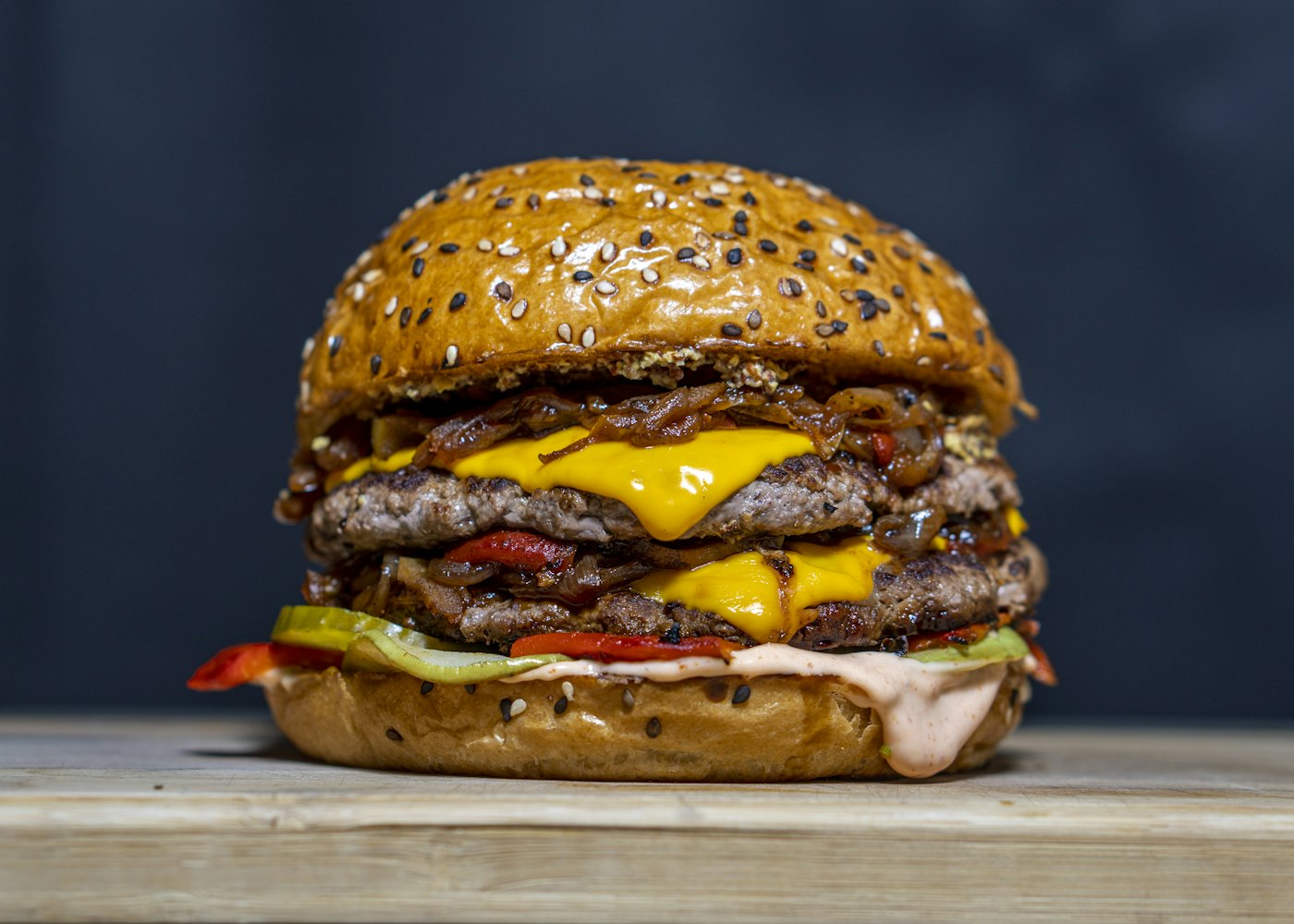
The best oil for smash burgers is a high smoke point fat: beef tallow for the most flavor, or refined avocado, peanut or canola oil for a neutral option. You only need a thin film, about a teaspoon or two, because 80/20 beef starts releasing its own fat within seconds. Skip butter and extra virgin olive oil on the cooking surface, since both burn at smash burger temperatures.
Do you even need oil for smash burgers?
Not much. With 80/20 beef, the patty renders plenty of fat almost as soon as you smash it. A thin film of oil does three things before that fat appears:
- Helps the first patties release instead of sticking.
- Fills tiny gaps between the beef and the metal for more even browning.
- Protects the seasoning on cast iron and carbon steel.
On a well-seasoned cast iron skillet or carbon steel griddle, a teaspoon or two is enough for a batch. If you're using leaner beef, you'll want a bit more. See our ground beef guide for why 80/20 is the standard.
Why smoke point matters
A smoke point is the temperature at which a fat starts to visibly smoke and break down. Smash burgers cook on a very hot surface; ThermoWorks recommends a surface temperature of 450°F or more. A fat with a low smoke point burns quickly at that heat, filling the kitchen with acrid smoke and leaving bitter flavors on the crust.
Smoke points vary with how refined an oil is, its quality and how it's measured, so published numbers differ. Treat the figures below as approximate.
The best fats for smash burgers
- Beef tallow (roughly 400°F and up; some sources list around 480°F): the most flavorful choice. It doubles down on the beefiness and handles high heat well. You can buy it in jars or save rendered fat from cooking beef.
- Refined avocado oil (about 520°F): one of the highest smoke points of common cooking oils, with a neutral flavor. It's usually more expensive. Unrefined avocado oil has a lower smoke point.
- Refined peanut oil (about 450°F): a high-heat favorite with a clean flavor. Skip it if anyone eating has a peanut allergy.
- Canola or vegetable oil (about 400 to 430°F): inexpensive, neutral and reliable for most home setups.
- Ghee or clarified butter (about 480°F): the way to get buttery flavor on the patty. Removing the milk solids raises the smoke point well above regular butter.
Even high smoke point fats will smoke a little on a ripping-hot surface. That's normal for smash burgers. Turn on the range hood or cook outside on a griddle.
Fats to avoid on the cooking surface
- Butter (about 300 to 350°F): its milk solids burn quickly at smash burger temperatures. Save it for toasting the buns on a cooler part of the pan.
- Extra virgin olive oil (roughly 350 to 410°F): its delicate flavor is lost at high heat and it can smoke and turn bitter. Use it for dressings, not searing.
- Unrefined nut and seed oils: toasted sesame and unrefined walnut oil are flavor oils with low smoke points.
- Cooking spray on a hot surface: it can leave a sticky residue that builds up on cast iron and griddles.
How to oil the pan for smash burgers
- Preheat the pan or griddle until it's very hot, just starting to smoke.
- Add a teaspoon of oil and spread it into a thin film with a folded paper towel held in tongs. You want a sheen, not a puddle.
- Add the beef and smash right away. See the full method in our Ultimate Smash Burger.
- Between batches, scrape off burnt bits and pour or wipe off excess grease. Add a little fresh oil only if the surface looks dry.
Too much oil is a common mistake. A pool of fat fries the edges instead of letting the whole surface sear, and it splatters more.
Best oil by cooking surface
- Cast iron skillet: tallow, canola or avocado oil. A thin film helps protect the seasoning.
- Carbon steel: the same fats. Carbon steel heats quickly, so watch the oil closely. Compare the two in Carbon Steel vs. Cast Iron.
- Outdoor flat-top griddle: canola, avocado or tallow. Use a squeeze bottle to add a little at a time. See how to cook burgers on a griddle.
- Stainless steel: a high smoke point oil and a fully preheated pan help prevent sticking.
- Nonstick: not recommended for smash burgers. Most nonstick coatings aren't meant for the very high heat a good crust needs.
After cooking: dealing with the grease
Let the grease cool, then pour it into a heat-safe container and throw it away, or strain and refrigerate it to cook with later. Never pour it down the drain. Then clean the pan while it's warm: see how to clean cast iron after burgers.
FAQ
What oil do restaurants use for smash burgers?
It varies by restaurant. Neutral, high smoke point oils are common, and some cooks use beef tallow for extra flavor. A busy flat-top also builds up plenty of beef fat from constant cooking.
Can I use olive oil for smash burgers?
Light or refined olive oil handles heat better than extra virgin, but neutral oils like canola or avocado are better choices for very high heat.
Is beef tallow better than oil for smash burgers?
For flavor, many people think so. It adds beefy richness and handles high heat. Functionally, a neutral high smoke point oil works just as well.
Can I cook smash burgers in butter?
Not on the cooking surface at full heat, because the milk solids burn. Use ghee for buttery flavor, or brush butter on the buns instead.
Hungry for more?
Find great burgers near you or cook one tonight.