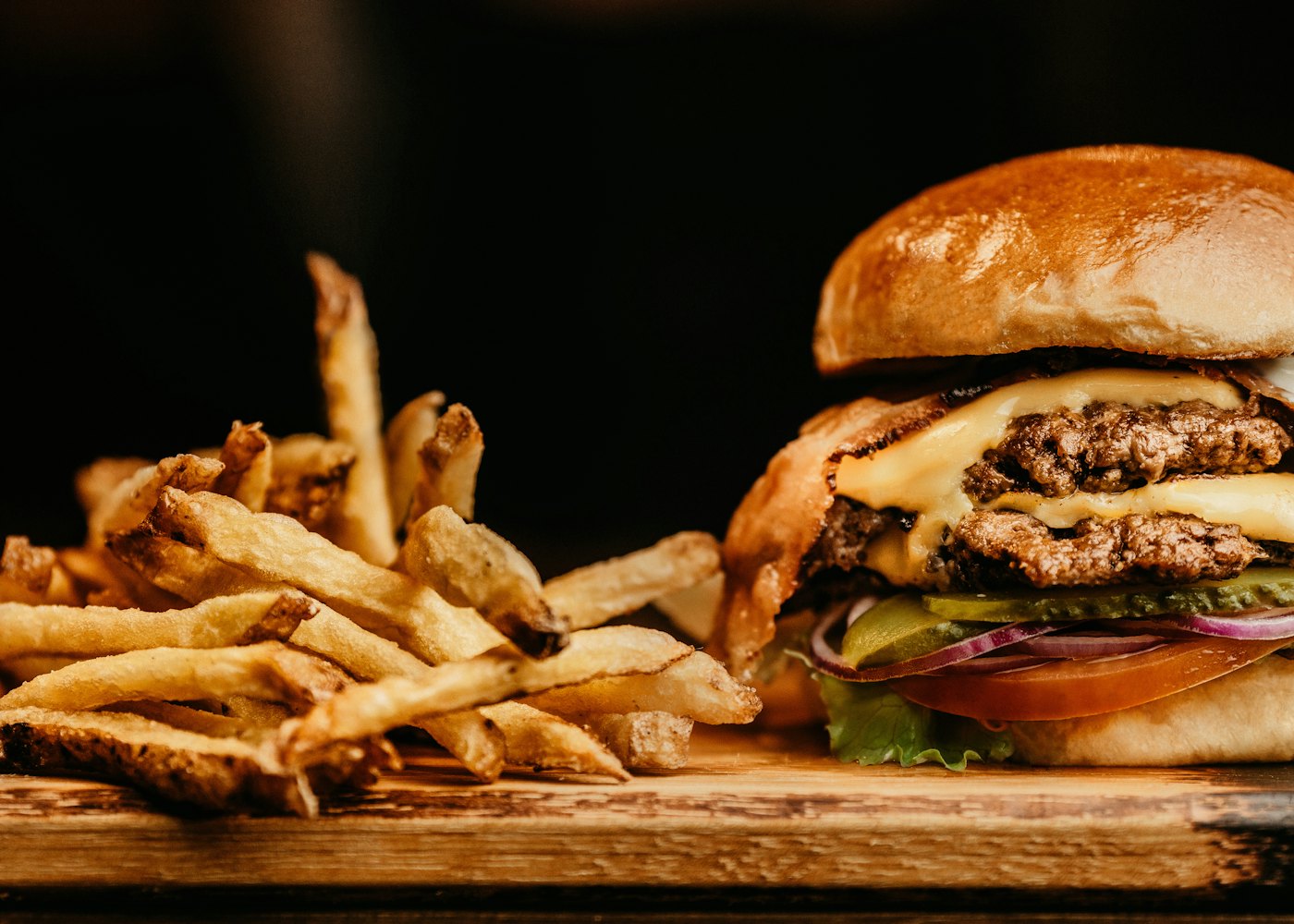
A smash burger is a ball of ground beef pressed thin onto a very hot griddle or skillet, which creates a large, crispy, deeply browned crust in just a few minutes. A regular (thick) burger is shaped into a patty before cooking and cooked more gently, so it stays thick and juicy in the middle. Both start with ground beef and end on a bun, but they're almost opposite approaches to the same idea.
Smash burger vs. regular burger: the short answer
- Smash burger: thin, crispy-edged, crust-forward, cooked in about 2-3 minutes, usually on a flat surface, often stacked as a double.
- Regular burger: thick, juicy, beef-forward, cooked in about 8-10 minutes, on a grill or in a pan, usually a single patty.
How the technique differs
Smash: a loose ball of cold beef hits a ripping-hot griddle or cast iron pan and is pressed hard to about 1/4 inch thick in the first 30 seconds or so. You press once, early, before juices start flowing, and then leave it alone. After a couple of minutes the edges are lacy and brown; you scrape it up with a stiff spatula, flip, add cheese, and it's done shortly after.
Thick: a 3/4-inch patty with a center dimple goes onto a grill or pan over medium-high heat and is left alone to form a crust, then flipped and cooked to the doneness you want. Cook time is usually 8 to 10 minutes. You never press it, because pressing a thick burger mid-cook just squeezes out juice.
Why smash burgers taste different
It comes down to browning. The savory, roasted flavor of a seared burger comes from the Maillard reaction, the chemical browning that happens when proteins and sugars meet high, dry heat. Smashing the patty flat puts far more of the beef in direct contact with the hot surface, so a bigger share of every bite is that crust. Thick burgers have proportionally less crust and more interior, so their appeal is a juicy, beefy, steak-like center.
In other words: smash burgers are about the outside, thick burgers are about the inside.
Beef and portion size
- Smash burgers: use fattier beef, around 80/20 or even 75/25. The fat helps the crust form and keeps a thin patty from drying out. Balls are typically about 2-4 oz each, and many people stack two per bun. Our smash burger calculator helps you plan how much beef to buy.
- Thick burgers: 80/20 chuck is the classic choice. Patties usually run 5-8 oz, formed about 1/2 to 1 inch wider than the bun to allow for shrinkage.
Equipment you'll need
For smash burgers, you need a flat, very hot surface (a cast iron or carbon steel pan, or a flat-top griddle) and something to press with. A grill grate won't work, because the beef will fall through. A stiff, wide spatula works, and a smash burger press makes it easier to press evenly. We compare the two in smash burger press vs. spatula, and our smash burger gear guide covers the rest of the kit.
For thick burgers, a grill is ideal, though a heavy skillet works well too. A thermometer matters more here than for smash burgers, since the center of a thick patty is where doneness is hardest to judge. Our guide to grilling burgers walks through it.
Doneness and food safety
The USDA safe minimum internal temperature for ground beef is 160°F. Smash burgers are so thin that they cook through almost instantly once flipped, so you're not really choosing a doneness; they're served cooked through. Thick burgers give you more control: you can cook them to 160°F, and some people choose lower temperatures like medium-rare or medium, which is a personal risk choice. Either way, a thermometer is the only reliable way to know. See our burger temperature and doneness guide for the full chart.
Cheese, toppings and buns
Smash burgers pair best with soft, quick-melting American cheese, which melts in the short time the patty has left after flipping. Keep toppings simple: pickles, thinly sliced onion and a tangy sauce. Soft, squishy buns like potato rolls suit them because they compress around the thin patties. One classic variation is pressing thinly sliced onions into the beef as you smash, as in our Oklahoma Fried Onion Burger.
Thick burgers can handle bigger cheeses (cheddar, Swiss, pepper jack) and heartier toppings like bacon, sautéed mushrooms or a thick slice of tomato. They need a sturdier bun that won't collapse under the juice.
Where did smash burgers come from?
The origins are debated. Thin, pressed patties cooked on a griddle go back a long way in American diner and lunch-counter cooking, and several places claim to have pioneered the style. What's certain is that the smash burger has become hugely popular in recent years, partly because it's fast, needs no grill, and delivers a restaurant-style crust at home.
Which should you make?
- Choose smash if you have a cast iron pan or griddle, want dinner fast, are feeding a crowd one batch at a time, or love crispy edges.
- Choose thick if you're grilling outdoors, want a burger that feels like a steak, or like your burger cooked less than well done (accepting the risk).
Ready to try? Start with our Ultimate Smash Burger or the Classic Backyard Cheeseburger.
FAQ
Are smash burgers better than regular burgers?
Neither is better; they're different. Smash burgers win on crust and speed, while thick burgers win on juiciness and a beefy center.
Can you make smash burgers on a grill?
Not on the grates, since the beef will fall through. Put a cast iron pan, griddle or flat-top insert on the grill and smash on that.
Why are my smash burgers not crispy?
Usually the surface isn't hot enough, the beef is too lean, or you pressed too late or too gently. Preheat thoroughly, use 80/20 or fattier beef, and smash hard in the first 30 seconds.
Can you smash a burger after it starts cooking?
You shouldn't. Pressing after the first moments squeezes out juices instead of creating crust. Smash once, early, and then leave it alone.
Hungry for more?
Find great burgers near you or cook one tonight.