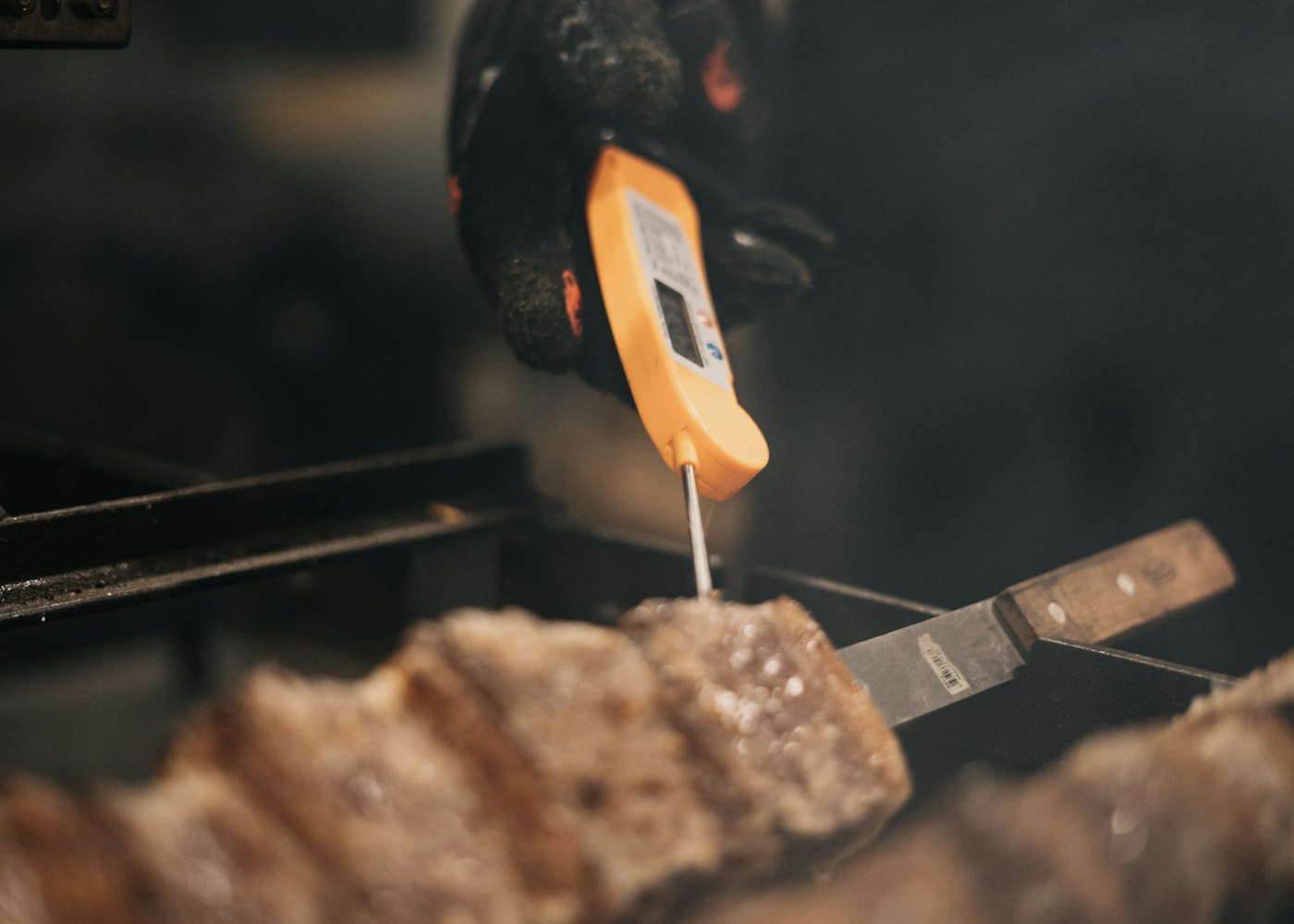
The USDA says ground beef is safe to eat once it reaches an internal temperature of 160°F (71°C), measured with a food thermometer; ground chicken and turkey need 165°F. Burgers cooked to lower temperatures, from rare (about 120-125°F) to medium (about 140-145°F), are juicier but carry more food safety risk. The right heat on your pan or grill, and a quick thermometer check, are what get you there.
Most burger problems come down to heat: a pan that isn't hot enough, a grill that's too hot, or no way of checking when the burger is done. This guide covers all three.
Burger doneness temperatures chart
These are common internal temperatures for beef burgers at each doneness level:
- Rare: 120-125°F. Cool red center.
- Medium-rare: 130-135°F. Warm red-pink center.
- Medium: 140-145°F. Pink center.
- Medium-well: 150-155°F. Slight pink.
- Well-done: 160°F and above. The USDA safe minimum for ground beef, pork, veal and lamb.
- Ground turkey or chicken: 165°F. Always cook poultry burgers all the way, like our juicy turkey burger.
For a printable version, see our burger temperature guide.
Why ground beef needs 160°F
On a whole steak, bacteria mostly live on the surface, and searing the outside takes care of them. Grinding mixes that surface meat all the way through the patty, so the center needs to get hot enough too. That's why the USDA lists 145°F with a rest for whole cuts of beef but 160°F for ground beef.
Eating a rare, medium-rare or medium burger is a personal risk choice. It's best avoided for young children, older adults, pregnant people and anyone with a weakened immune system. If you do choose a lower temperature, start with very fresh beef from a source you trust, keep it cold, and cook it soon after buying.
Cooking surface temperature
- Smash burgers: as hot as your stove will go. A cast iron skillet or griddle should be preheated about 5 minutes until it just starts to smoke. See our ultimate smash burger recipe.
- Thick burgers on the grill: medium-high heat, around 400 to 450°F (up to about 500°F for thinner patties), with clean, oiled grates.
- Thick burgers in a skillet: medium-high to start, then medium if the outside browns too fast.
- Onion burgers: medium-high, so the onions caramelize before they burn.
- Oven-baked burgers: 400 to 425°F on a wire rack.
- Air fryer: 375 to 400°F.
Cook times (approximate)
- Smash patties (¼ inch): 2 to 3 minutes total.
- ½-inch patties on the grill: about 6 to 8 minutes total to 160°F.
- ¾-inch patties on the grill: about 8 to 10 minutes total to 160°F.
- ¾-inch patties in a skillet: about 10 to 12 minutes total to 160°F.
- 1-inch patties on the grill: about 12 to 14 minutes total to 160°F, often finished over indirect heat.
For full charts by doneness, see how long to grill burgers and how to cook burgers on the stove. Smash and thick burgers behave very differently; smash burger vs. regular burger explains why.
Checking doneness
Color isn't a reliable sign of doneness. USDA research found that ground beef can turn brown before it reaches a safe temperature (called premature browning), and some patties stay pink even after reaching 160°F. Pressing the patty or checking whether juices run clear won't tell you either.
Use an instant-read meat thermometer instead:
- Insert it from the side into the thickest part of the patty, so the tip sits in the center rather than near the surface or the pan.
- Go at least ½ inch deep. For thin patties, the side approach is the only way to reach the middle.
- Check near the end of cooking and wait for the reading to settle.
- Check more than one burger if they're different sizes.
- Clean the probe between raw and cooked checks.
Need a recommendation? Our best meat thermometer for burgers guide compares the options.
Carryover cooking and resting
Burgers keep cooking for a short time after they come off the heat, often rising a few degrees as they rest. That's why many cooks pull burgers a few degrees under their target when aiming for medium-rare or medium. If you're cooking to the USDA's 160°F for safety, though, make sure the thermometer actually reads 160°F rather than relying on carryover. A 2- to 3-minute rest lets the juices settle before you bite in.
Special cases
- Stuffed burgers: a cheese-filled patty like our Juicy Lucy still needs the meat to reach 160°F. Check the beef portion, not the molten cheese, and let it rest before biting in, because the filling stays extremely hot.
- Frozen patties: cook over slightly lower heat so the outside doesn't burn before the center is done.
- Restaurant burgers: according to USDA, the FDA Food Code allows restaurants to serve ground beef cooked to 155°F held for 15 seconds. If you're unsure, ask how your burger is cooked.
FAQ
What temperature is a medium burger?
About 140 to 145°F inside, with a pink center. That's below the USDA's 160°F safe minimum for ground beef, so it carries some food safety risk.
Is a burger safe if it's still pink inside?
It can be. A burger that reads 160°F is safe even if some pink remains. The color alone doesn't tell you; the thermometer does.
Where should I put the thermometer in a burger?
Insert it from the side into the center of the thickest part of the patty, at least ½ inch deep, keeping the tip away from the pan or grate.
What temperature should turkey burgers be cooked to?
165°F. Ground poultry should always be cooked all the way through, never to rare or medium.
Hungry for more?
Find great burgers near you or cook one tonight.