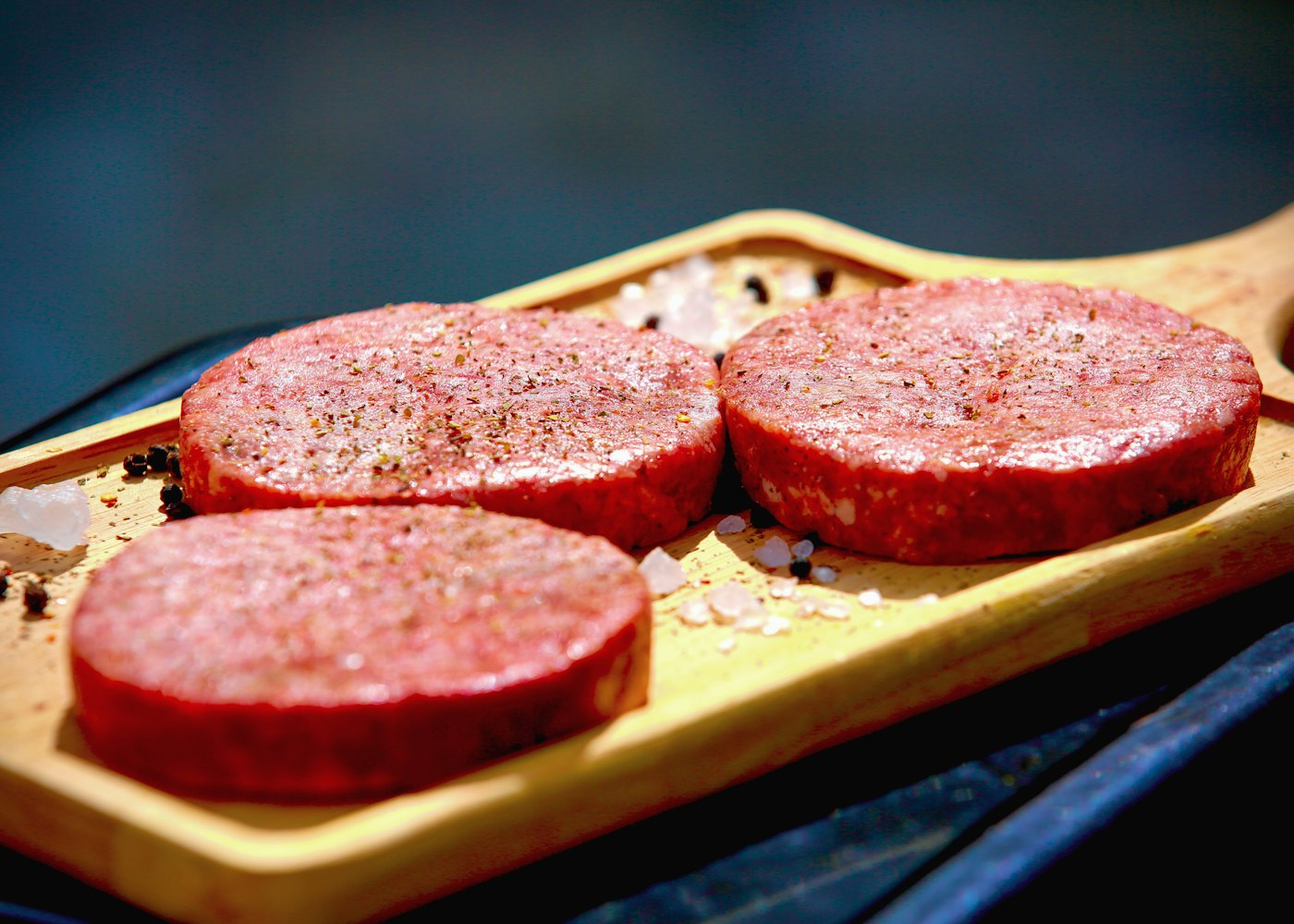
The best ground beef for burgers is 80/20 ground chuck: 80 percent lean and 20 percent fat, from a well-marbled cut with deep beefy flavor. That fat keeps burgers juicy and helps them brown. Leaner blends like 90/10 work but tend to cook up drier, while blends of chuck with brisket or short rib add richness if you want to go further.
Fat ratio: why 80/20 is the standard
"80/20" means 80% lean meat and 20% fat by weight. That fat melts as the burger cooks, keeping it juicy, carrying flavor and helping the surface brown. Leaner blends like 90/10 tend to cook up dry and crumbly, especially as smash burgers, where the thin patty has nowhere to hide. Here's how the common ratios behave:
- 70/30 or 73/27: very rich and inexpensive, but greasy, with more shrinkage and flare-ups on the grill.
- 75/25: extra juicy; good for smash burgers on a hot griddle.
- 80/20: the all-purpose burger blend. Juicy, flavorful and easy to cook on the grill, in a skillet or on a griddle.
- 85/15: a good middle ground if you want slightly less fat; still makes a decent burger.
- 90/10 and leaner: best for recipes where fat is drained off. As burgers, they need gentle cooking and extra moisture from toppings or sauce.
Ground beef vs. hamburger: what the label means
In the U.S., the USDA's Food Safety and Inspection Service sets labeling rules for these products. A few key points:
- Fat limit: both "ground beef" and "hamburger" can contain no more than 30 percent fat.
- Added fat: beef fat can be added to products labeled "hamburger," but not to products labeled "ground beef."
- No fillers: neither may contain added water, phosphates, binders or extenders, though seasonings are allowed.
- Cut names: "ground chuck," "ground round" and "ground sirloin" tell you which part of the animal the meat came from, not a specific fat percentage. Check the lean/fat ratio on the label as well.
- "Lean" and "extra lean": these are defined nutrient claims. "Lean" means less than 10 grams of fat per 100 grams, and "extra lean" means less than 5 grams, along with limits on saturated fat and cholesterol. Those are great for some dishes but tend to make dry burgers.
For burgers, the lean/fat ratio printed on the package is the most useful number on the label.
The best cuts for burgers
- Chuck: the classic burger cut, with great flavor and naturally close to 80/20. Ground chuck is commonly sold at around 80 or 85 percent lean.
- Brisket: rich and beefy; often blended with chuck.
- Short rib: very rich and fatty; great in small amounts in a custom blend.
- Sirloin: leaner with a steak-like flavor; best blended with a fattier cut.
- Round: very lean and mild. On its own it makes a dry burger, so blend it with chuck or added fat.
Custom burger blends
Blending cuts lets you control both flavor and fat. Popular combinations include chuck with brisket, chuck with short rib, and sirloin with brisket. A good starting point is mostly chuck with a smaller portion of a richer cut. Our burger blend calculator helps you work out proportions to hit your target fat ratio, whether you're asking a butcher to grind for you or grinding at home.
Store-bought, butcher-ground or home-ground
- Supermarket packages: convenient and consistent. Look for a clear lean/fat ratio, bright red color on the surface and a sell-by date that's still a few days out. Meat in the center may look grayish brown; that's normal and comes from limited oxygen exposure.
- Butcher counter: ask for a coarse grind of chuck, or a custom blend ground fresh. Many butchers will grind a cut you pick out.
- Grinding at home: gives you full control over cuts, fat and grind size. Keep the meat and grinder parts very cold, ideally partially frozen, so the fat stays firm and doesn't smear.
Grass-fed vs. grain-fed beef
Grass-fed beef is often leaner than grain-finished beef and can taste more mineral or earthy. Because it may have less fat, pay close attention to the lean/fat ratio on the label and avoid overcooking. Grain-finished beef tends to be milder and richer. Either can make an excellent burger; it comes down to taste and budget.
Grind and handling
A coarse grind gives a looser, more tender burger. Whatever you buy, keep it cold and handle it as little as possible. Warm, overworked beef turns dense and tough. Season just before cooking (see how to season burgers) and shape patties gently; our guide to forming burger patties covers size, thickness and the thumbprint trick. Planning a cookout? See how much ground beef per burger to figure out how much to buy.
Storing ground beef
- Refrigerator: keep it at 40°F or below and use it within 1 to 2 days of purchase.
- Freezer: frozen ground beef stays safe indefinitely, but for best quality use it within about 4 months.
- Thawing: thaw in the refrigerator, in cold water in a sealed bag, or in the microwave if you'll cook it right away.
Food safety
Ground beef should be cooked to an internal temperature of 160°F (71°C), the USDA's safe minimum for ground beef, pork and lamb. Ground poultry, as in a turkey burger, needs 165°F (74°C). Grinding mixes surface bacteria throughout the meat, which is why ground beef is treated differently from a whole steak; choosing a pinker, lower temperature is a personal risk choice. Color isn't a reliable indicator, so keep an instant-read thermometer nearby, especially for thick patties, and check our burger temperature guide for doneness targets.
Frequently asked questions
Is 80/20 or 85/15 better for burgers?
80/20 makes a juicier, more flavorful burger and is the standard choice. 85/15 works if you want slightly less fat, but it's less forgiving if you overcook it.
Is hamburger meat the same as ground beef?
They're similar, and both are capped at 30 percent fat under USDA rules. The difference is that beef fat can be added to hamburger, but not to ground beef.
Can I use 90/10 ground beef for burgers?
Yes, but expect a firmer, drier burger. Cook it gently, don't press on the patties, and add moisture with cheese, sauce or juicy toppings.
Why is my ground beef brown inside the package?
Oxygen turns the surface bright red, so meat inside the package can look grayish brown simply from lack of air. That's normal. But if all of the meat has turned gray or brown, or it smells off or feels sticky, it may be spoiling and should be thrown out.
Hungry for more?
Find great burgers near you or cook one tonight.