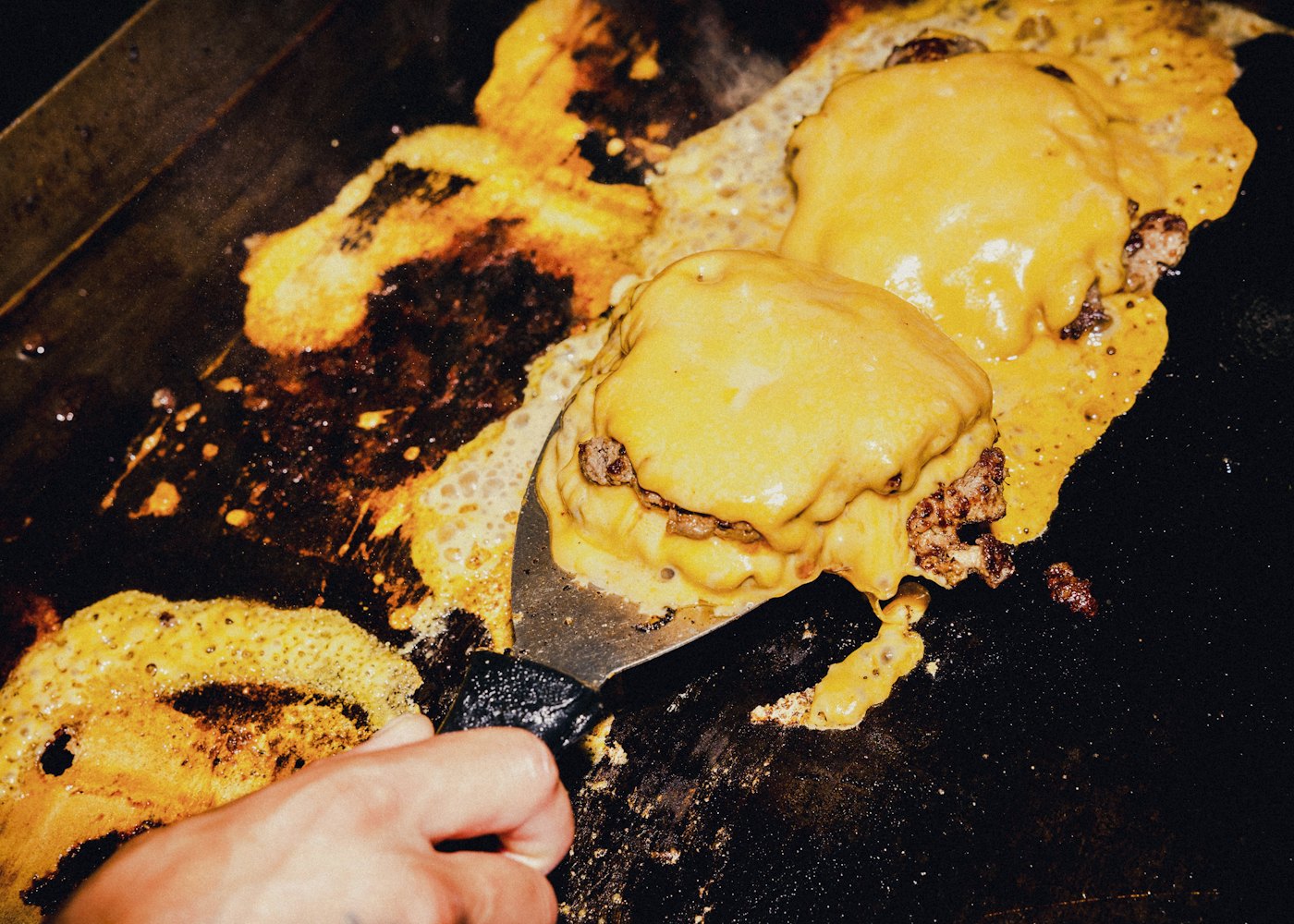
Season burgers on the outside, right before they hit the heat, with kosher salt and freshly ground black pepper. Mixing salt into ground beef before shaping makes the texture dense and springy, more like sausage. Good beef doesn't need much more than that, but how and when you season it makes a real difference.
When to salt burgers: right before cooking
Salt draws out moisture and dissolves some of the proteins in meat, especially one called myosin. Dissolved myosin turns sticky and binds the meat together, which is exactly what you want in sausage and exactly what you don't want in a tender burger.
America's Test Kitchen tested this by salting patties three ways: mixed in before shaping, on the surface 30 minutes ahead, and on the surface just before cooking. The longer the salt was in contact with the beef, the firmer and springier the burger got. Only the patties salted right before cooking came out uniformly tender.
So the rule is simple: shape the patties first, then season the outside generously just before they go into the pan or onto the grill. Our guide to forming burger patties covers the shaping part.
One exception: if you grind your own beef and it's coarse and loosely packed, a little salt mixed in can help the patties hold together on a grill. For store-bought ground beef, stick with salting the surface.
How much salt to use on a burger
There's no single right amount, since it depends on your taste, the size of the patty and how salty your toppings are (cheese, bacon and pickles all add salt). As a starting point, many cooks use roughly 3/4 to 1 teaspoon of kosher salt per pound of beef, split across both sides of the patties. Kosher salt's larger flakes are easier to sprinkle evenly than fine table salt, and they're harder to overdo. If you use table salt, use a bit less.
Season from about a foot above the patty so the salt falls in an even layer instead of clumping in one spot.
Keep it simple: salt and pepper
Kosher salt and freshly ground black pepper are all a classic burger needs, especially if you're starting with good 80/20 chuck. (See our guide to the best ground beef for burgers if you're choosing a blend.) The beef, the crust and the toppings carry the flavor.
Pepper can scorch over very high heat and taste bitter. If you're cooking on a ripping-hot griddle, you can add pepper after flipping or once the burgers come off the heat.
Simple burger seasoning blends
If you want more than salt and pepper, try one of these blends on the outside of the patty. Mix a batch ahead of time and keep it in a jar.
- Diner blend: salt, pepper, and a pinch each of garlic powder and onion powder.
- Smoky: salt, pepper and smoked paprika.
- Steakhouse: coarse salt and cracked black pepper, plus a little granulated garlic.
- Southwest: salt, pepper, cumin and a little chili powder. Great with roasted green chiles, like our Green Chile Cheeseburger.
- Herby: salt, pepper, dried oregano and a pinch of red pepper flakes.
Spice blends with sugar in them brown faster and can burn over high heat, so use them on medium-heat burgers or watch closely.
How to season smash burgers
For smash burgers, season after you press the patty, not before. Place the ball of beef on the hot surface, smash it flat, and then season the top generously, since it's now a big, thin surface. Season again lightly after flipping if you like. The thin patty means there's a lot of surface for salt and crust relative to the meat. Try it with our Ultimate Smash Burger.
What about mix-ins?
Mix-ins like Worcestershire sauce, minced onion, garlic or fresh herbs can work, but they change the texture and make patties harder to shape. If you use them:
- Chop solids finely so they don't create weak spots that break apart.
- Go light on liquids; a teaspoon or so of Worcestershire per pound is plenty.
- Mix gently and briefly with your fingertips, then shape without packing.
- Still save the salt for the outside, right before cooking.
Overworking the meat also makes burgers shrink and dome more as they cook. Here's why burgers shrink and how to prevent it.
Seasoning turkey and veggie burgers
Leaner patties play by different rules. Ground turkey and chicken are milder and have less fat, so they benefit from more seasoning and some mix-ins for moisture and flavor, like grated onion or a little Worcestershire. Because poultry patties are usually mixed and handled more anyway, mixing seasoning in is fine. Just remember ground poultry needs to reach 165°F, while ground beef needs 160°F per the USDA. Our Juicy Turkey Burger shows the approach.
Season the toppings too
A pinch of salt on sliced tomatoes, a little pepper on raw onion, and a good sauce make a bigger difference than you'd expect. Try our Easy Burger Sauce, and see our list of the best burger toppings for more ideas.
FAQ
Should you season burgers before or after forming patties?
After. Shape the patties first, then salt the outside just before cooking. Salt mixed in ahead of time makes beef burgers dense and springy.
Can you season burgers the night before?
You can add salt-free spices ahead of time, but wait to add salt until right before cooking for the most tender texture.
Do you season both sides of a burger?
Yes. Season one side right before it goes on the heat, then season the other side just before or after you flip.
Is seasoned salt good on burgers?
It can be. Seasoned salt blends often contain sugar and other spices, so use it in place of plain salt rather than in addition to it, and watch for burning over high heat.
Hungry for more?
Find great burgers near you or cook one tonight.