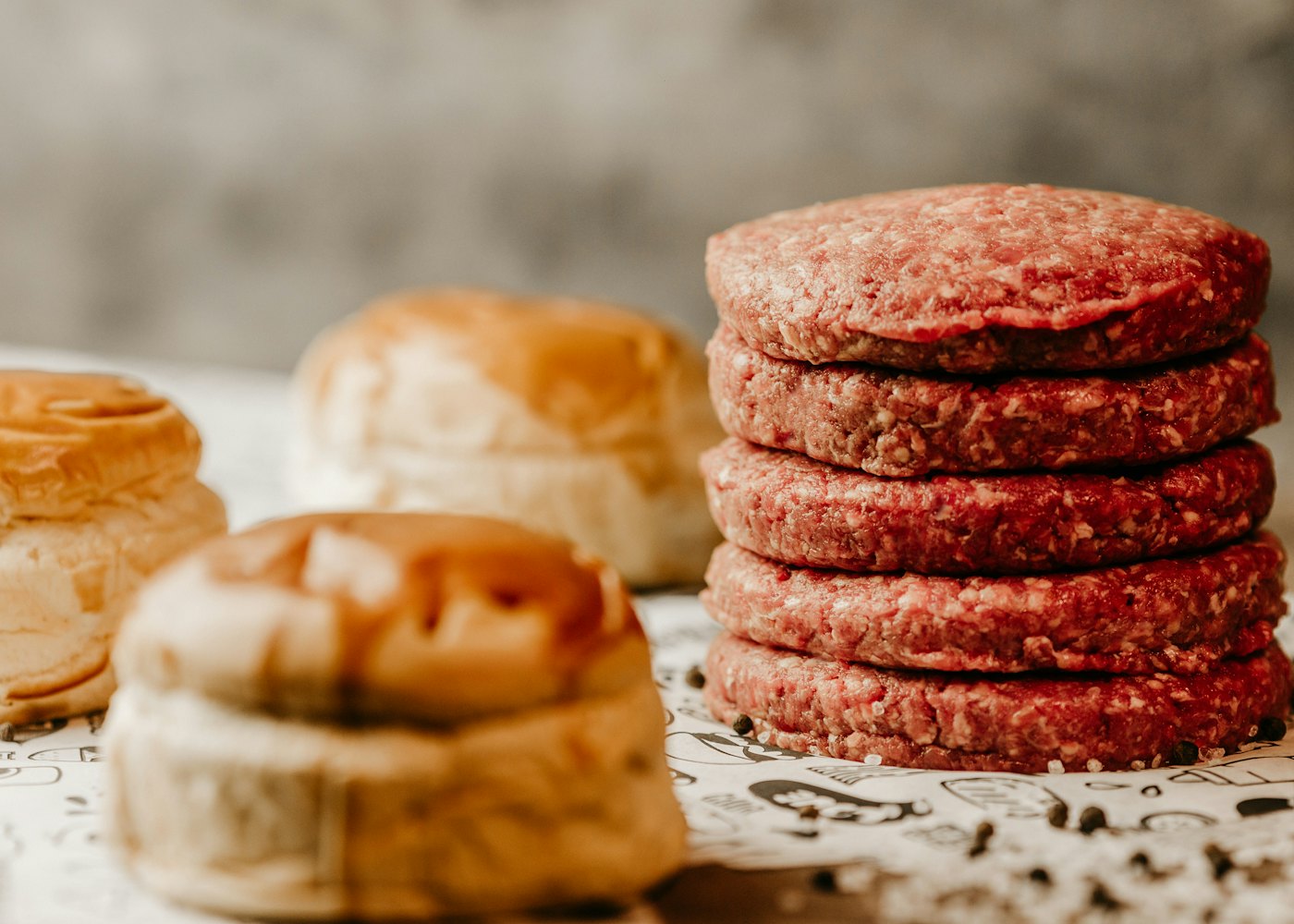
To form burger patties, start with cold ground beef, divide it into equal portions by weight, and gently shape each portion into a round about 1/2 to 3/4 inch thick and a little wider than your bun. Press a shallow dimple into the center, season the outside just before cooking, and handle the meat as little as possible. That's the whole method; the details below help you get it right every time.
Start with the right beef
Ground chuck labeled 80/20 (80% lean, 20% fat) is the classic burger choice. It has enough fat to stay juicy and hold together without shrinking as much as fattier blends. Leaner beef works, but it's easier to dry out, so pull it off the heat promptly. For a deeper look at grinds and blends, see our guide to the best ground beef for burgers.
Keep the meat cold
Take the beef out of the refrigerator right before you shape it. Cold fat stays firm in little pockets, which gives you a tender, juicy burger. Warm meat smears, gets sticky and is harder to shape. If your hands are warm, run them under cold water first (and dry them) before you start. Raw ground beef should be kept at 40°F or below and cooked or frozen within 1 to 2 days of purchase, per the USDA.
Burger patty size chart: weight and thickness
Weighing portions on a kitchen scale is the easiest way to get burgers that cook evenly. Here are common sizes, by raw weight:
- Sliders, 2 oz: about 1/2 inch thick, for slider buns
- Smash burger balls, 2-4 oz: rolled into loose balls, not patties, and pressed thin on the griddle
- Standard quarter-pounder, 4 oz: about 1/2 inch thick
- Generous backyard burger, 5-6 oz: about 3/4 inch thick
- Thick pub-style burger, 8 oz: about 1 inch thick; needs gentler heat so the center cooks through
Not sure how much beef to buy? Our guide to how much ground beef per burger covers portions per person and per pound.
How wide should a burger patty be?
Make each patty about 1/2 to 1 inch wider than the bun. Burgers shrink as proteins tighten and fat renders, so a patty that fits the bun perfectly when raw will look small once it's cooked. For a typical 4-inch bun, aim for a raw patty roughly 4 1/2 to 5 inches across. Here's more on why burgers shrink and how to limit it.
How to form burger patties, step by step
- Divide the meat. Break the cold beef into loose chunks and weigh out equal portions. Don't knead it into one big mass first.
- Loosely gather each portion. Cup it between your hands and press just enough to bring it together into a rough ball or puck. Stop as soon as it holds.
- Flatten gently. Set the ball on a piece of parchment and press it into a round of even thickness, using your palm or the flat bottom of a plate or pan. Even thickness matters more than perfectly round edges.
- Tidy the edges. Cup your hand around the rim and rotate the patty to close up any big cracks. Small cracks are fine.
- Dimple the center. Press your thumb or the back of a spoon about 1/4 inch into the middle. This keeps the patty from doming as it cooks, especially on a grill.
- Chill if needed. If the patties feel soft, refrigerate them on a plate for 15-30 minutes so they hold their shape.
- Season right before cooking. Salt and pepper the outside just before the patties hit the heat.
Don't overwork the meat
The biggest mistake in forming patties is handling them too much. Ground beef is already broken up; kneading and compacting it pushes the pieces together into a dense, springy texture, closer to meatloaf than a burger. A good patty holds together but still looks a little loose and craggy.
The same goes for salt. Mixing salt into the meat before shaping dissolves some of the proteins and makes them bind, which is great for sausage but not for burgers. Testing by America's Test Kitchen found that the longer salt sat on the beef before cooking, the firmer and springier the burger got. Season the outside right before cooking instead; our guide on how to season burgers goes deeper.
If you want mix-ins like minced onion or herbs, chop them finely (about 1/4 inch or smaller) and fold them in with your fingertips, briefly, so the patties still hold together.
Tools that help
- A kitchen scale takes the guesswork out of portioning.
- Parchment paper keeps patties from sticking to the counter and to each other.
- A jar lid or ring mold can work as a quick guide for diameter: press the meat inside the ring, then lift it off.
- A burger press makes uniform patties fast, and many can also form stuffed burgers. The catch is that it's easy to compress the meat too much, so press lightly. We weigh the pros and cons in is a stuffed burger press worth it?
How to form stuffed burgers
For a cheese-stuffed burger like our Juicy Lucy, make two thin patties of equal size. Place the cheese in the center of one, leaving a clean border, top with the second patty, and pinch the edges firmly to seal so the cheese can't leak out. Chill stuffed patties before cooking so the seam holds, and be careful with the first bite: the melted cheese inside is very hot.
Making patties ahead and freezing them
You can form patties a few hours ahead; keep them covered in the refrigerator with parchment between layers, and cook within the 1-to-2-day window for raw ground beef. To freeze, lay dimpled patties on a parchment-lined sheet pan, freeze until firm, then stack them with parchment between each one in a freezer bag. They're best within about 4 months. You can cook them straight from frozen; see how to cook frozen burgers.
Food safety while forming patties is simple: wash your hands with hot, soapy water before and after handling raw meat, keep raw patties away from ready-to-eat foods, and use a clean plate for cooked burgers. Cook ground beef to 160°F, the USDA safe minimum; going lower is a personal risk choice.
Ready to put it into practice? Our Classic Backyard Cheeseburger is a great first recipe.
FAQ
How thick should a burger patty be?
About 1/2 to 3/4 inch thick for most burgers. Thinner patties cook fast and work well in a pan; thicker ones are best on a grill over moderate heat.
How much does a burger patty weigh?
A standard patty is about 4 oz (a quarter pound) raw. Many people prefer 5-6 oz for a heartier backyard burger, and 2 oz for sliders.
Why do my burger patties fall apart?
The meat may be too lean, too warm or too loosely shaped, or the patty was flipped before a crust formed. Keep the beef cold, use 80/20, press just until it holds and wait for the patty to release from the pan before flipping.
Should you add egg or breadcrumbs to burger patties?
Not for beef burgers. Egg and breadcrumbs are binders that make the texture more like meatloaf. They're more useful in leaner patties like turkey or veggie burgers.
Can you form burger patties the night before?
Yes. Cover them and keep them refrigerated, separated by parchment, and wait to salt them until just before cooking.
Hungry for more?
Find great burgers near you or cook one tonight.