As an Amazon Associate, PlanetBurger earns from qualifying purchases.
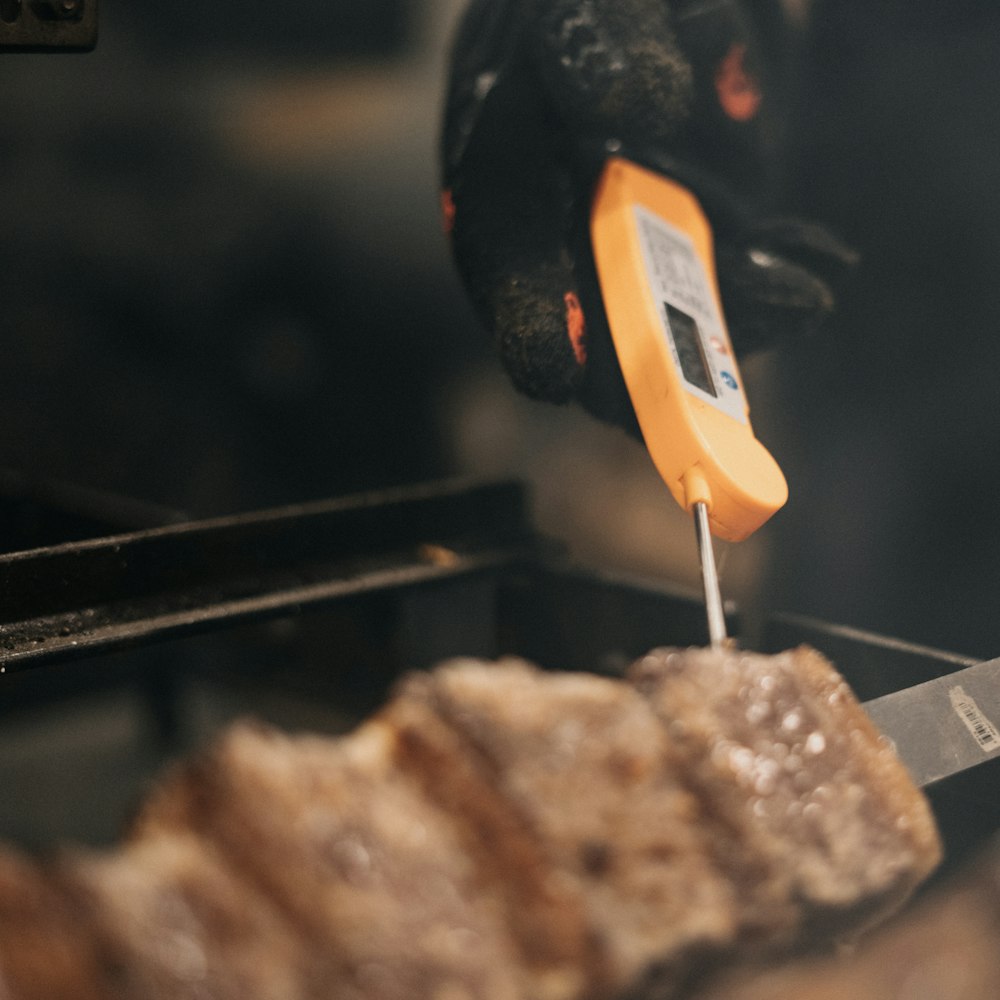
The best meat thermometer for burgers is a digital instant-read model with a thin probe that senses temperature at the very tip. It reads the center of a patty in seconds, works on any grill or pan, and is the only reliable way to know you've reached the USDA's 160°F for ground beef without cooking your burger to leather.
Quick pick
- Our pick: ThermoPro TempSwift Instant-Read Thermometer. A budget-friendly digital instant-read, which is exactly the type burgers call for. More about it.
Why color and touch don't work for burgers
Ground beef can stay pink after it's safely cooked, and it can turn brown inside before it gets there. The "poke test" is even less reliable on a burger than on a steak, because fat content, patty thickness and how tightly the meat was packed all change how it feels. A thermometer removes the guesswork. Food safety targets are simple:
- Ground beef, pork and lamb: 160°F (71°C)
- Ground turkey and chicken: 165°F (74°C)
- Reheated leftover burgers: 165°F
Cooking beef burgers to a lower doneness is a personal risk choice. If you're weighing it, read is a medium-rare burger safe? first, and see our burger temperature chart for every doneness level.
Which type of thermometer to buy
Digital instant-read (best for burgers)
You insert it, read the number, and pull it out. Most use a thermistor or thermocouple sensor near the tip, so they can read the middle of a thin patty. University extension food safety guides specifically recommend digital thermometers for thin foods like hamburgers for this reason. It's also the most useful all-round kitchen thermometer, from chicken to fried oil.
Leave-in probe (wired or wireless)
A probe stays in the meat while a display sits outside the grill or oven. It shines on long cooks like roasts, pork shoulder or brisket. Burgers cook too quickly and are too thin for it to add much, though it's handy if you smoke thick burgers.
Dial (bimetallic stem)
Dial thermometers are inexpensive but slow, and their sensing zone runs a couple of inches up the stem rather than sitting at the tip. That makes them a poor fit for a patty under an inch thick. They also need regular recalibration.
Pop-up and fork thermometers
Skip these for burgers. Pop-up timers are made for whole poultry, and fork-style gadgets tend to be clumsy in a small patty.
What to look for in a burger thermometer
- A sensor at the tip. This is the single most important feature for thin patties. Check that the product describes a tip-sensing, instant-read probe.
- A thin probe. A slim tip slides into the side of a patty easily and leaves a smaller hole.
- Reasonable speed. Faster readings mean less time hovering over a hot grill with the lid open. Any decent digital instant-read is fast enough for burgers; you don't need a premium model.
- A display you can read at an angle. You'll usually be looking down at it over a grill or stove. A large, backlit or rotating display helps.
- Some water resistance. Splashes happen at the sink. Look for a stated water-resistance rating if you plan to rinse it often.
- A way to check accuracy. Some models have a calibration function; others can only be checked. Either way, an ice-water test tells you if it's reading true.
The thermometer we recommend
The ThermoPro TempSwift is an affordable digital instant-read thermometer, which covers everything a burger cook actually needs: a quick reading from the center of the patty, on any cooking surface. If you already own a good instant-read for other cooking, it'll do the job too. Read how we choose the gear we recommend.
How to check a burger's temperature
- Go in from the side. Slide the probe horizontally through the edge of the patty so the tip lands in the center. Going in from the top on a thin burger usually puts the tip in the pan or out the other side.
- Find the thickest point. On a burger with a dimple or uneven edges, aim for the thickest area.
- Keep the tip off the metal. Touching the grate or pan gives a falsely high number.
- Move it off the heat if needed. Food safety guidance suggests lifting the patty onto a clean spatula or plate and checking it there to avoid burns.
- Check more than one spot on big or oddly shaped patties, and check each burger, since they rarely cook at exactly the same rate.
- Pull at 160°F (165°F for poultry) and rest for a couple of minutes before serving.
For a stuffed burger like the Juicy Lucy, measure the meat, not the molten cheese pocket. For turkey, see our juicy turkey burger guide, since lean poultry overcooks fast once it passes 165°F.
Using a thermometer with different burger styles
- Thick grilled burgers: Start checking a minute or two before you expect them to be done. Our grilling times guide gives a starting point, but the thermometer has the final word.
- Smash burgers: They're thin and cook in a few minutes, so they almost always reach a safe temperature. A quick side check on your first batch builds confidence.
- Leftovers: When reheating a burger, bring the patty to 165°F.
Care and accuracy
- Clean the probe after every use. Wipe or wash it with hot, soapy water, especially between raw and cooked checks. Don't submerge the body unless the maker says it's waterproof.
- Run an ice-water test now and then. Fill a glass with crushed ice, top it with water, stir and wait about a minute. With the tip in the center (not touching the glass), it should read 32°F. If it doesn't and your model can't be recalibrated, adjust your readings or replace it.
- Store it with the probe covered or folded away so the tip doesn't bend.
- Replace batteries before they die. A weak battery can cause slow or erratic readings.
FAQ
Where do you put a thermometer in a burger?
Insert it through the side of the patty so the tip sits in the center of the thickest part, not touching the pan or grate.
What temperature should a burger be?
The USDA recommends 160°F for ground beef, pork and lamb, and 165°F for ground turkey and chicken.
Can I use a leave-in probe for burgers?
You can, but burgers cook so quickly that an instant-read is more practical. Leave-in probes earn their keep on long roasts and smoked meats.
Do I need an expensive thermometer?
No. For burgers, any digital instant-read with a tip sensor and a clear display does the job. Pricier models mainly add speed and durability.
How do I know if my thermometer is accurate?
Use the ice-water test. A properly working thermometer should read 32°F in a well-stirred glass of ice water.
Hungry for more?
Find great burgers near you or cook one tonight.