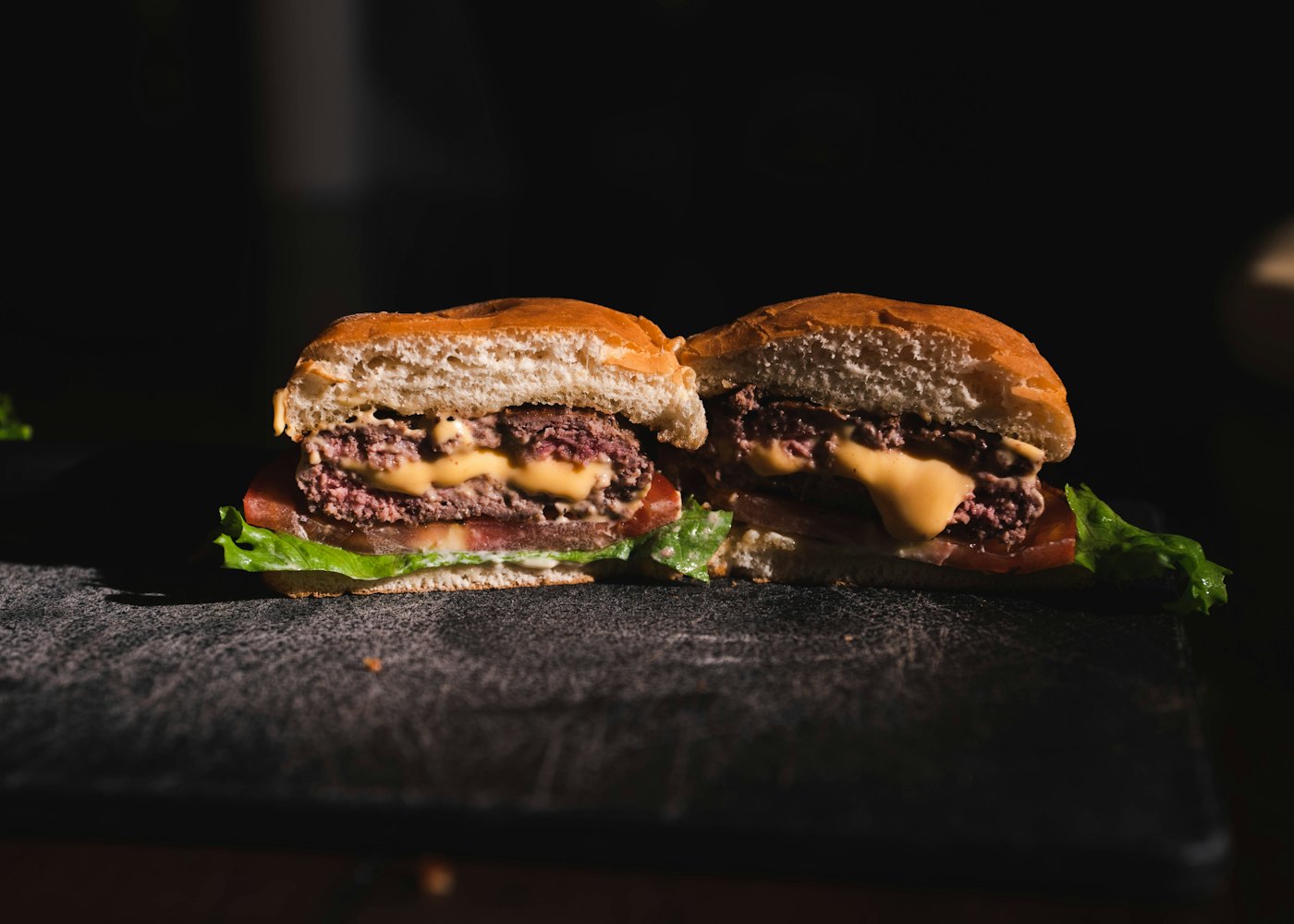
On a grill heated to about 400 to 450°F, a ¾-inch beef burger takes roughly 8 to 10 minutes total (4 to 5 minutes per side) to reach well-done, and about 6 to 7 minutes for medium-rare. Thinner ½-inch patties need about 6 to 8 minutes, while 1-inch patties need 10 to 14. Times are only a starting point: the USDA says ground beef is safe at 160°F, and a thermometer is the only way to know you're there.
Use the charts below to plan your cook, then confirm with a quick temperature check before the burgers come off the grates.
Burger grill time chart by thickness
These times assume fresh (not frozen) 80/20 beef patties cooked over direct, medium-high heat of about 400 to 450°F, flipped once. Gas and charcoal grills both run hotter or cooler than their dials suggest, so treat every number as "about."
½-inch patties (about 4 ounces)
- Medium-rare (130-135°F): about 2 to 3 minutes per side
- Medium (140-145°F): about 3 minutes per side
- Medium-well (150-155°F): about 3 to 4 minutes per side
- Well-done (160°F): about 4 minutes per side
¾-inch patties (about 5 to 6 ounces)
- Rare (120-125°F): about 2½ minutes per side
- Medium-rare (130-135°F): about 3 minutes per side
- Medium (140-145°F): about 3½ to 4 minutes per side
- Medium-well (150-155°F): about 4 to 4½ minutes per side
- Well-done (160°F): about 5 minutes per side
1-inch patties (about 7 to 8 ounces)
- Rare (120-125°F): about 3 minutes per side
- Medium-rare (130-135°F): about 4 minutes per side
- Medium (140-145°F): about 4 to 5 minutes per side
- Medium-well (150-155°F): about 5 to 6 minutes per side
- Well-done (160°F): about 6 to 7 minutes per side
Patties thicker than 1 inch tend to burn outside before the center is done over direct heat. For those, sear them over the hot side of the grill, then slide them to the cooler side and close the lid until they reach temperature.
How long to grill burgers for medium, medium-rare and well-done
If you just want a quick rule for the most common ¾-inch patty, here it is:
- Medium-rare: about 6 minutes total
- Medium: about 7 to 8 minutes total
- Medium-well: about 8 to 9 minutes total
- Well-done (USDA safe, 160°F): about 9 to 10 minutes total
A food safety note: USDA and FoodSafety.gov list 160°F as the safe minimum internal temperature for ground beef, pork, veal and lamb, and 165°F for ground chicken and turkey. Grinding spreads any surface bacteria through the meat, which is why ground beef is treated differently from a steak. Rare, medium-rare and medium burgers are below that line, so ordering or cooking one is a personal risk choice. It's not a good idea for young kids, older adults, pregnant people or anyone with a weakened immune system. Our burger temperature and doneness guide explains each level in more detail.
What temperature should the grill be for burgers?
Aim for medium-high heat, roughly 400 to 450°F at the grates. Some cooks go as high as 500°F for a darker crust, which works for thin patties but makes thicker ones easy to scorch.
- Gas grill: preheat with the lid closed for 10 to 15 minutes, then set the burners to medium-high.
- Charcoal grill: the coals are ready when they glow orange and are covered with a thin layer of gray ash. A common hand test is that you can hold your palm a few inches above the grate for only 2 to 3 seconds.
- Two-zone setup: keep one side hot and the other low or off. It gives you a safe place to move burgers during flare-ups and lets thick patties finish gently.
Clean, oiled grates matter as much as the temperature. Burgers stick to dirty grates, and if you tear the crust trying to flip, you lose juice and flavor. For a full walkthrough of the setup, see how to grill burgers.
Things that change grill time
Two burgers cooked side by side can finish minutes apart. These are the usual reasons:
- Thickness, not weight: a wide, flat 6-ounce patty cooks faster than a tall 6-ounce patty. Measure thickness when you shape them.
- Starting temperature: patties straight from the fridge take a little longer than ones that sat out briefly. Don't leave raw meat out more than about 2 hours (1 hour above 90°F).
- Frozen patties: expect roughly 50 percent more time, and use slightly lower heat so the outside doesn't burn. See how to cook frozen burgers.
- Fat content: leaner beef cooks a bit faster and dries out sooner. Fattier beef causes more flare-ups.
- Lid open or closed: closing the lid traps heat and cooks thick burgers more evenly. With the lid open, you'll rely more on direct heat from below.
- Weather: wind and cold air pull heat from the grill, so cooking times stretch on chilly days.
- Turkey and veggie burgers: ground poultry must reach 165°F, so a turkey burger usually needs a minute or two more than beef of the same size.
How to tell when a grilled burger is done
Color is not a reliable test. USDA research found that ground beef can turn brown before it reaches a safe temperature, and some properly cooked patties stay pink at 160°F. Poking, pressing and cutting into the burger are just as unreliable, and cutting lets juices run out.
An instant-read thermometer settles it in a few seconds. Slide the probe in from the side, toward the center of the thickest part, so the tip sits in the middle rather than poking through to the grate. If you don't have one, a basic instant-read meat thermometer is the single most useful grilling tool you can buy, and our meat thermometer guide covers what to look for.
Burgers rise a few degrees as they rest off the heat. That carryover is useful for hitting medium-rare or medium, but if you're cooking to the USDA's 160°F, make sure the thermometer actually reads 160°F before you serve rather than counting on carryover.
You can also keep our printable burger temperature guide handy near the grill.
Tips for consistent grill times
- Make patties the same size. Uniform patties finish together. Weigh the meat or use a lid as a template.
- Press a shallow dimple in the center. Patties puff in the middle as they cook, and a dimple keeps them flat so they cook evenly. Here's more on why burgers shrink and puff up.
- Flip once, maybe twice. Let the first side form a crust so it releases cleanly. Pressing with a spatula only squeezes out juice and starts flare-ups.
- Add cheese in the last minute. Lay the slice on, close the lid, and it melts in about 30 to 60 seconds.
- Toast buns at the end. Put them cut-side down over medium heat for 30 to 60 seconds while the burgers rest.
- Rest for 2 to 3 minutes. A short rest lets the juices settle before you build the burger.
Ready to put the chart to work? Our classic backyard cheeseburger is a great first cook.
FAQ
How long do you grill burgers on each side?
For a ¾-inch patty over medium-high heat, about 3 minutes per side for medium-rare, 4 for medium and 5 for well-done. Thinner patties need less time and thicker ones need more, so confirm with a thermometer.
Should I grill burgers with the lid open or closed?
Either works. Thin patties cook fine with the lid open. Closing the lid helps thicker burgers cook through evenly and melts cheese faster, but watch closely because the burgers will finish sooner.
How long do you grill burgers at 350°F?
At 350°F, plan on roughly 6 to 7 minutes per side for a ¾-inch patty to reach 160°F. Lower heat gives a paler crust, so it's best for frozen patties or for finishing thick burgers on the cool side of a two-zone fire.
How long do burgers need to rest after grilling?
About 2 to 5 minutes. That's enough time for the juices to settle and to toast the buns, without the burgers going cold.
Is it safe to eat a pink burger?
Pink doesn't tell you much either way. A burger that reads 160°F is safe even if it's a little pink, and a brown one might not be safe if it hasn't reached that temperature. Go by the thermometer, not the color.
Hungry for more?
Find great burgers near you or cook one tonight.