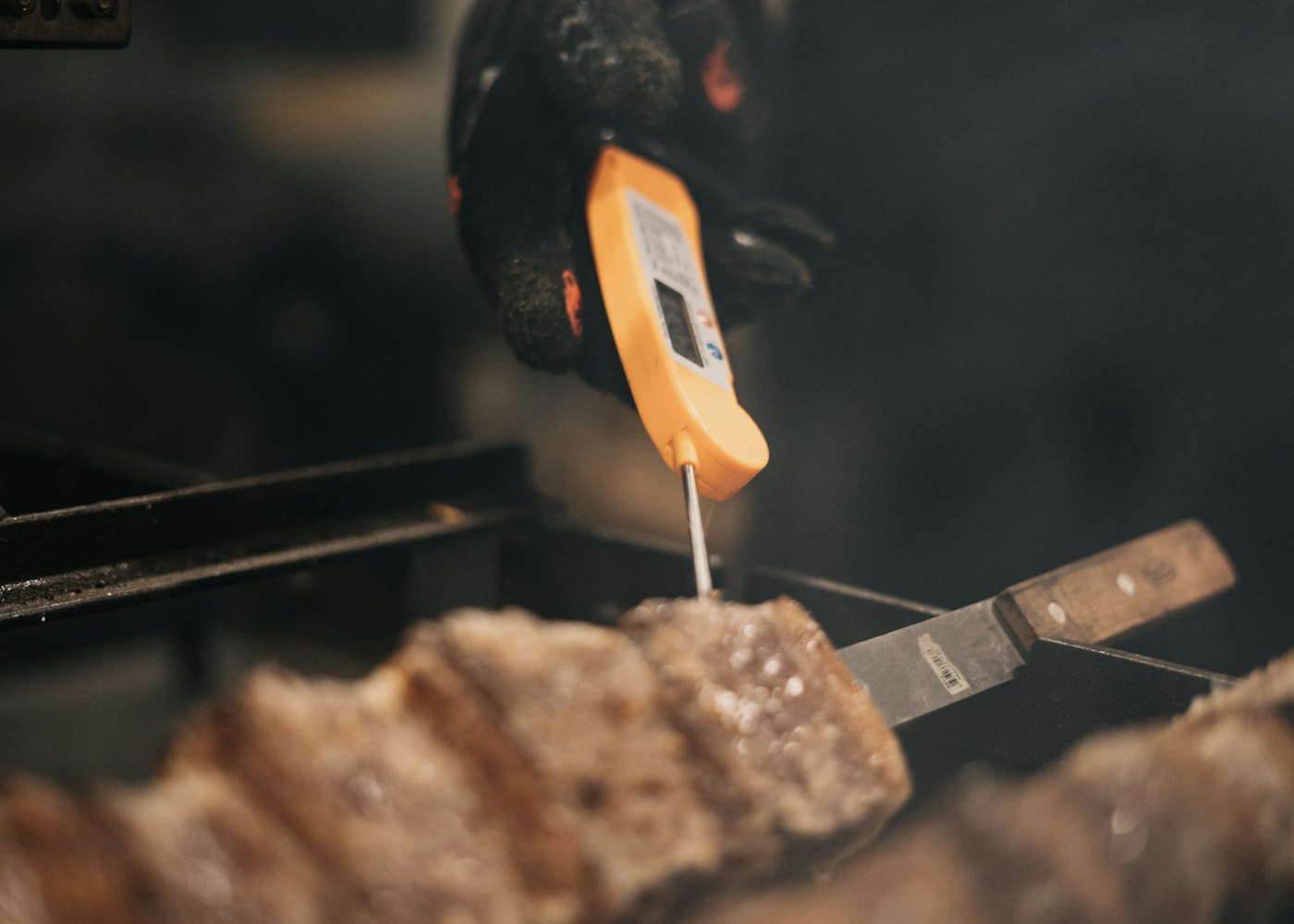
A medium-rare burger carries more risk than a medium-rare steak, which is why USDA recommends cooking all ground beef to 160°F (71°C) and advises against eating raw or undercooked ground beef. Grinding can spread bacteria from the meat's surface into the center of the patty, where a pink middle never gets hot enough to kill them. Many people still choose pink burgers, but it's a personal risk decision, not a safe-by-default one.
Here's why burgers are different from steak, why color can fool you and how to make a fully cooked burger that's still juicy.
Why burgers are different from steak
On a whole steak, any bacteria are almost entirely on the outside surface. Searing the outside kills them, which is why USDA's minimum for whole cuts of beef is 145°F with a three-minute rest, and why a rare steak is a lower-risk choice.
Grinding changes the picture. As beef is ground, the surface gets mixed all the way through, so bacteria such as E. coli O157:H7 can end up in the middle of the patty. A medium-rare center, at around 130°F to 135°F, isn't hot enough to reliably kill them. That's why USDA treats ground beef differently from steaks and roasts.
What USDA recommends
- Cook ground beef to 160°F (71°C), measured with a food thermometer.
- Don't eat or taste raw or undercooked ground beef.
- Don't partially cook burgers ahead to finish later; partial cooking lets bacteria survive and grow.
- Ground poultry needs 165°F. See juicy turkey burgers.
Why color doesn't tell you if a burger is done
You can't judge a burger's safety by looking at it. According to USDA research on the color of cooked ground beef, more than a quarter of fresh patties in testing turned brown inside before reaching 160°F, a problem called premature browning. It's more likely with beef that's been frozen and thawed or stored for a while in the fridge. The reverse also happens: some patties, especially lean ones, can stay pink even after reaching a safe temperature.
The only reliable check is an instant-read thermometer. Insert it into the side of the patty so the tip sits in the center of the thickest part. For thin patties, going in sideways is especially important.
Burger doneness temperatures
For reference, here's roughly where each doneness level falls. Only the last one meets USDA's recommendation. See our full burger temperature chart and the burger doneness guide.
- Rare: about 120°F to 125°F
- Medium-rare: about 130°F to 135°F
- Medium: about 140°F to 145°F
- Medium-well: about 150°F to 155°F
- Well done: 160°F and above (USDA recommended)
Who should always choose 160°F
Some people are more likely to get seriously ill from foodborne bacteria. USDA identifies children under 5, pregnant women and adults 65 and older among those most at risk, and E. coli O157:H7 can cause a serious kidney complication called hemolytic uremic syndrome, particularly in young children. People with weakened immune systems are also at higher risk. Anyone in these groups should stick with burgers cooked to 160°F, and that's the safest choice when you're cooking for kids.
Why restaurants serve pink burgers
Many restaurants will cook a burger to order. When they do, you'll often see a note on the menu warning that eating raw or undercooked meat may increase the risk of foodborne illness. Some restaurants grind their own beef in-house from whole cuts, which gives them more control over handling, but it doesn't make an undercooked burger risk-free. If you order a burger medium-rare, you're accepting that added risk.
Can you lower the risk at home?
If you choose to cook burgers below 160°F, some cooks take steps they believe reduce the risk, like grinding whole cuts themselves right before cooking, keeping everything very cold and cleaning equipment thoroughly. These steps may limit contamination, but none of them is a substitute for cooking to 160°F, and USDA's recommendation doesn't change. At minimum, follow the basics: keep raw beef at 40°F or below, use it within 1 to 2 days, and keep raw juices away from other food.
Keeping a 160°F burger juicy
A fully cooked burger doesn't have to be dry:
- Use 80/20 ground beef. The fat keeps it moist. See the best ground beef for burgers.
- Handle the meat gently and form patties loosely. See how to form burger patties.
- Don't press the patty with your spatula while it cooks.
- Pull it right at 160°F. Overshooting is what dries burgers out.
- Try smash burgers. Thin patties cook through fast and get crispy edges. See the ultimate smash burger.
More tips in how to make juicy burgers and how long to grill burgers.
FAQ
Is a pink burger always undercooked?
No. A burger can stay pink after reaching 160°F, and a brown one can still be under temperature. Use a thermometer instead of color.
Why can I eat a rare steak but not a rare burger?
Bacteria on a steak stay mostly on the surface, which searing kills. Grinding mixes surface bacteria into the center of a burger.
Is grinding my own beef safer?
It gives you more control over freshness and handling, but it doesn't eliminate risk. USDA still recommends 160°F for all ground beef.
What temperature is a medium-rare burger?
About 130°F to 135°F in the center, well below USDA's recommended 160°F.
Does freezing ground beef kill bacteria?
No. Freezing at 0°F keeps bacteria dormant, but they can become active again once the beef thaws. Only cooking to a safe internal temperature kills them.
Hungry for more?
Find great burgers near you or cook one tonight.