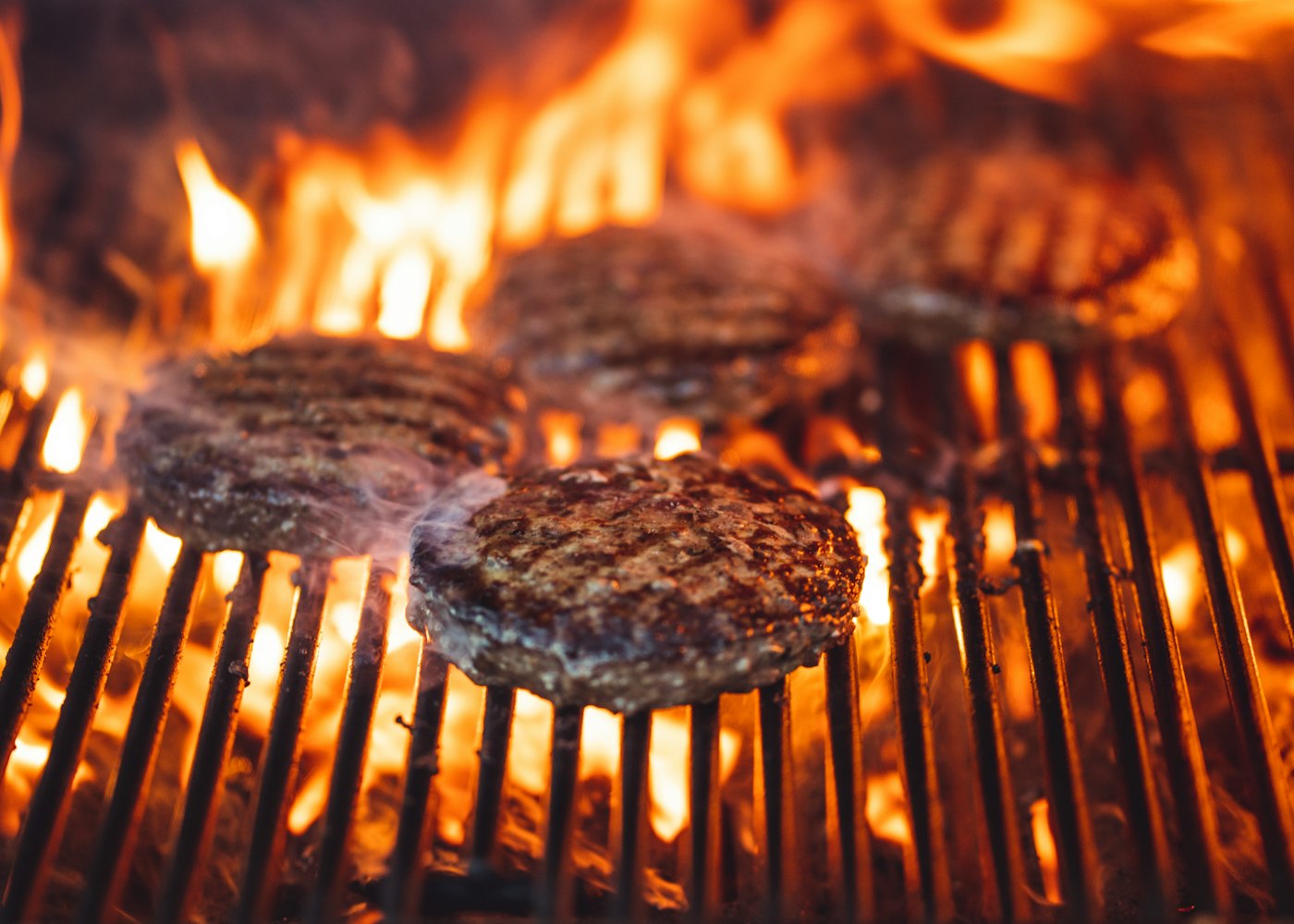
For burgers, charcoal has a slight edge in searing heat and that classic backyard flavor, while gas wins on convenience, speed and control. Because burgers cook in under 10 minutes, the difference is smaller than with slow-cooked barbecue: a well-preheated gas grill makes an excellent burger, and the beef, the preheat and a thermometer matter more than the fuel.
Charcoal vs. gas at a glance
- Heat: Edge to charcoal. A full chimney of hot coals can put out intense direct heat, which makes it easy to get a dark char. Many gas grills get plenty hot too, but output varies a lot by model.
- Flavor: Slight edge to charcoal. Burgers cook too quickly to pick up much true smoke, but fat dripping onto hot coals creates the smoky, grilled flavor people associate with cookouts. Gas grills create some of this too, just less.
- Convenience: Gas, easily. Turn a knob, preheat for 10 to 15 minutes and cook. Charcoal needs about 20 to 30 minutes to light and ash over, plus ash cleanup afterward.
- Control: Gas. Adjusting a burner is faster and more precise than moving coals or adjusting vents.
- Cost: It depends. Charcoal grills are often cheaper to buy, but you burn through a bag of fuel faster than a tank of propane if you grill often.
Which one makes the better burger?
It depends on what kind of burger you like and how often you grill.
- Choose charcoal if you love a heavy char and smoky flavor, enjoy the ritual of building a fire, and usually grill on weekends when time isn't tight.
- Choose gas if you grill on weeknights, want dinner on the table fast, or cook for a crowd and need steady, predictable heat.
- Use what you have. Burgers are one of the most forgiving foods on any grill. Focus on the things that matter more: 80/20 beef, a hot and clean grate, and pulling the burgers at the right temperature. See how to grill burgers.
How to grill burgers on charcoal
- Light the coals with a chimney starter. It's faster and more even than piling briquettes, and you avoid lighter fluid, which can leave an off flavor if the coals aren't fully lit.
- Wait for gray ash. Dump the coals once the top layer is covered in ash. Weber's guidance for some fire setups is to let coals burn down another 10 to 20 minutes after emptying the chimney.
- Build two zones. Pile the coals on one side for direct, high heat and leave the other side empty. Sear over the coals and move thick burgers to the cool side to finish or melt cheese.
- Preheat the grate. Put the cooking grate on, close the lid for 5 minutes, then scrub it clean and oil it lightly.
- Grill with the lid on. Use the vents to control heat: more open means hotter, more closed means cooler.
How to grill burgers on gas
- Preheat with the lid closed for 10 to 15 minutes, until the grill reaches about 450 to 500°F.
- Clean and oil the grates once they're hot.
- Set up a cooler zone by turning one burner to low or off.
- Keep the lid closed between checks so the grates stay hot and the burgers cook evenly.
- Add a smoker box with a handful of wood chips if you want a little more smoky flavor.
For timing on either grill, see how long to grill burgers.
What matters more than the fuel
- The beef. 80/20 chuck stays juicy over high heat. See our ground beef guide.
- A full preheat. A grill that isn't hot enough sticks and steams.
- Flipping once. Let the crust form so the patty releases cleanly.
- A thermometer. Burgers are safe at 160°F (71°C), and an instant-read thermometer keeps you from overcooking them. Color isn't a reliable guide. See our burger temperature guide.
- Safe handling. Put cooked burgers on a clean plate, not the one that held raw patties, and don't leave food out more than 2 hours (1 hour when it's above 90°F).
Flare-ups: charcoal vs. gas
Fatty burgers cause flare-ups on any grill. On charcoal, they tend to be more intense because the coals are right below the food. On gas, grease can also collect in the drip tray and catch fire if it isn't cleaned.
- Move burgers to the cooler zone until the flames die down.
- Keep the lid closed to limit oxygen.
- Clean the grease tray or empty the ash regularly.
- Never spray water on a grease fire.
Or skip the grates entirely
Smash burgers need full contact with hot metal, which grates can't give you. Set a carbon steel griddle or cast iron skillet right on either grill and you'll get diner-style crust with outdoor heat. See how to cook burgers on a griddle. Want real smoke flavor? Try smoked burgers.
FAQ
Do burgers taste better on charcoal or gas?
Many people prefer charcoal for its stronger char and smoky flavor, but the difference is modest for burgers because they cook so quickly. A properly preheated gas grill makes a great burger.
How hot should the grill be for burgers?
Around 450 to 500°F for direct grilling. Use the cooler zone for thick burgers that need extra time to reach 160°F inside.
Is lump charcoal or briquettes better for burgers?
Both work. Lump lights faster and burns hotter but less evenly; briquettes burn steadier and longer. For a quick burger cook, either is fine.
Can you get smoky flavor on a gas grill?
Some. A smoker box or foil pouch of wood chips over a burner adds light smoke flavor, though it won't match a charcoal fire or a smoker.
Hungry for more?
Find great burgers near you or cook one tonight.