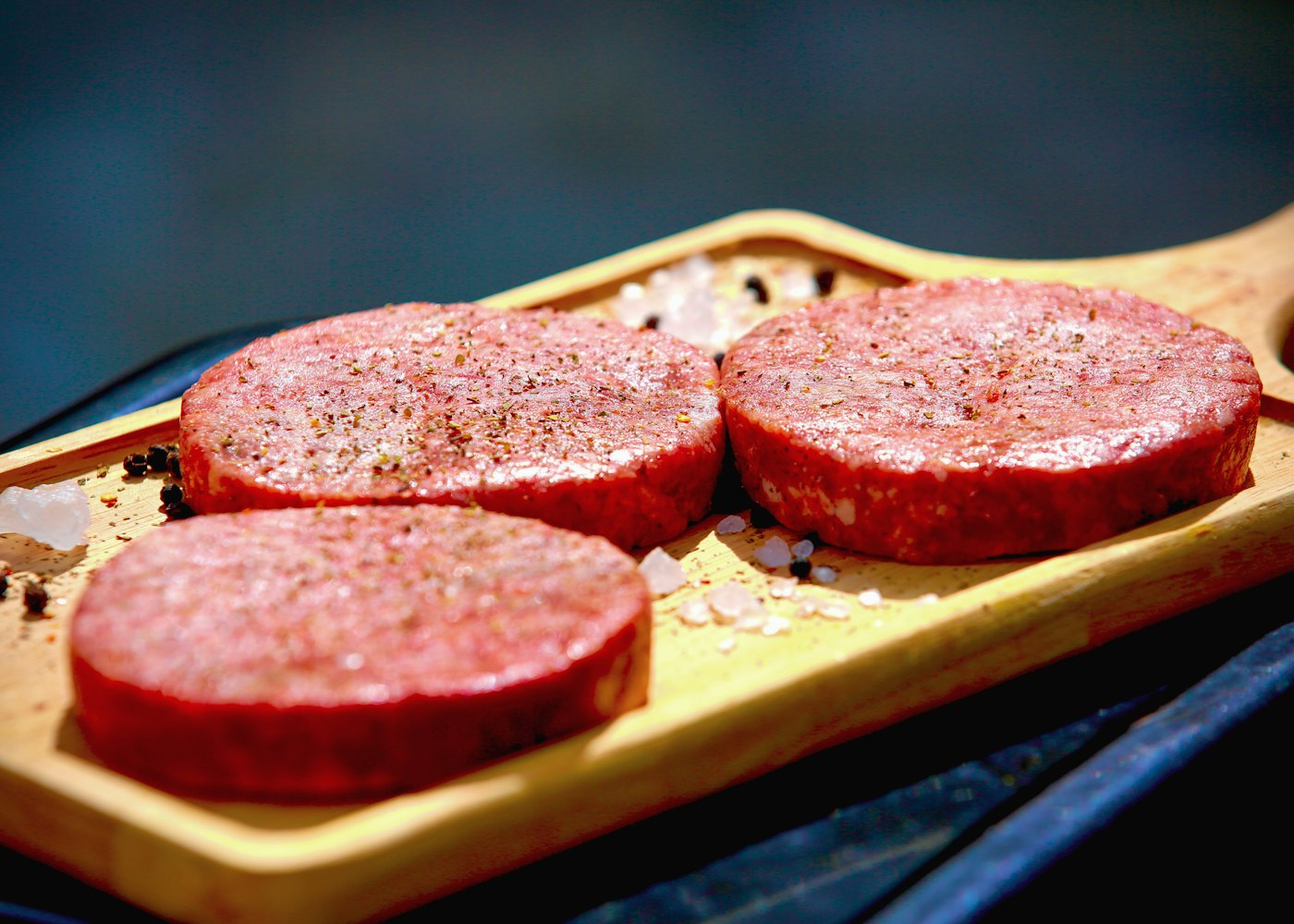
To keep burgers from falling apart, use 80/20 beef instead of very lean beef, keep it cold, chill the shaped patties for 15 to 30 minutes, and don't flip until a crust has formed and the patty releases on its own. A fully preheated, clean grate and a wide, stiff spatula take care of most of the rest. Lean meats like turkey need a binder such as egg or breadcrumbs.
Few things are more frustrating than a burger that breaks apart on the grill. The good news: it's almost always one of a handful of fixable mistakes.
1. The beef is too lean
Fat helps hold a patty together and keeps it tender as it cooks. Very lean beef (90/10 or leaner) tends to crumble, crack and dry out. Use 80/20 ground chuck for most burgers. If you want a leaner burger, 85/15 is a reasonable compromise. See our ground beef guide.
2. The beef is too warm
Warm fat smears and the patty goes soft and loose. It's also more likely to slump through the grates.
- Keep beef in the fridge until you're ready to shape it.
- Work quickly, and rinse your hands in cold water first.
- Chill shaped patties on a tray for 15 to 30 minutes before cooking so they firm up.
3. The patties are too loosely formed (or overworked)
There's a sweet spot. Beef that's barely pressed together has gaps that split when you flip it. Beef that's kneaded and packed hard turns dense and tough. Gather the beef into a ball, press it firmly once into a patty and smooth any cracks around the edge with your fingertips. Our guide to forming burger patties shows how.
4. Too many wet mix-ins
Chopped onions, peppers, cheese cubes and sauces break up the meat and add moisture, both of which weaken the patty.
- Chop mix-ins finely and use only a small amount.
- Sauté wet vegetables first and let them cool.
- Better yet, put the flavor on top: cheese, sauce and onions do just as much there.
5. Lean meat with no binder
Turkey, chicken, bison and very lean beef have less fat to hold them together. A binder helps:
- Egg: about 1 egg per 1 to 1½ pounds of meat.
- Breadcrumbs or panko: 2 to 4 tablespoons per pound.
- Panade: bread soaked in milk, mashed into a paste. It adds moisture and structure.
For a tested approach, see our guide to juicy turkey burgers. Beef with 20% fat doesn't need a binder.
6. The patty is too thin or uneven
Thin, ragged edges overcook and crack before the center is done. Shape patties about ¾ inch thick and slightly wider than the bun, since they shrink as they cook. A shallow dimple in the center keeps them flat. If yours shrink a lot, see why burgers shrink.
7. Flipping too soon
A raw burger sticks to the grate or pan. Once a crust forms, it releases on its own. If you try to flip before that, the bottom tears off and the patty breaks.
- Wait about 3 to 4 minutes before the first flip on a hot grill.
- Test gently: if it doesn't release with a light nudge, give it another 30 seconds.
- Flip once, or as few times as possible.
8. Cold or dirty grill grates
Burgers tear when they stick. Preheat the grill fully (10 to 15 minutes with the lid closed), scrub the grates clean and oil them lightly with a folded paper towel held in tongs. On the stove, use a heavy pan that's properly preheated. See how to grill burgers and how to cook burgers on the stove.
9. The wrong spatula
A thin, flexible spatula folds the patty in half, and a narrow one supports only part of it. A wide, stiff griddle spatula with a sharp front edge slides under the whole burger, keeps the crust attached and keeps it in one piece.
Does salt help burgers hold together?
Yes, but there's a trade-off. Salt mixed into ground beef ahead of time dissolves some proteins, which makes the meat stickier and better at holding together. It also makes the texture denser and more sausage-like. For most beef burgers, a tender texture is worth more, so salt the outside right before cooking. If you're making burgers with lots of mix-ins, mixing a little salt in can help. See how to season burgers.
Quick fixes
- Freeze briefly. 15 minutes in the freezer right before cooking makes patties extra firm. For longer storage, see how to freeze burger patties.
- Use a barrier. On the grill, cook delicate patties on a grill mat, a perforated grill pan or a sheet of foil.
- Use a pan. A cast iron skillet or griddle supports the whole patty, so it can't fall through the grates.
- Patch cracks with your fingers before cooking. They only get bigger on the heat.
However you hold them together, cook beef burgers to 160°F (71°C) and check with a thermometer rather than by color.
FAQ
Why do my burgers crumble when I flip them?
Usually the crust hasn't formed yet, the grates weren't hot or clean, or the beef is too lean. Wait until the patty releases on its own and use a wide, stiff spatula.
Do you need egg in burgers to hold them together?
Not with 80/20 beef. The fat and proteins hold it together. Egg helps with lean meats like turkey or with patties that have a lot of mix-ins.
Should I refrigerate burger patties before grilling?
Yes. Chilling shaped patties for 15 to 30 minutes firms the fat so they hold their shape and release cleanly.
Why do my burgers fall apart in the pan?
The pan may not be hot enough, so the patty sticks and steams instead of searing. Preheat a heavy pan for several minutes and flip only after a crust forms.
Hungry for more?
Find great burgers near you or cook one tonight.