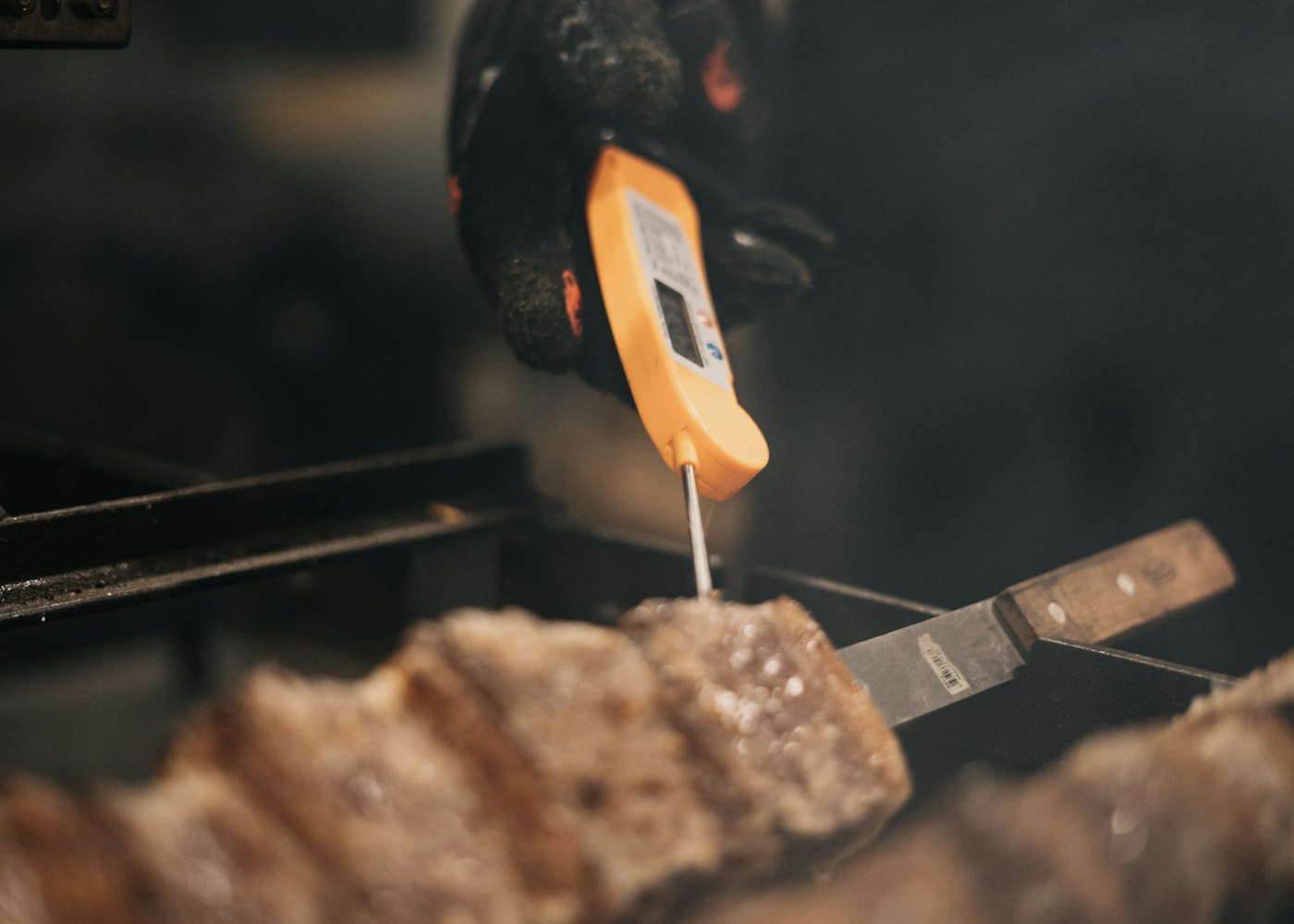
Without a thermometer, you can judge a burger's doneness by pressing it to check firmness, by timing it against its thickness, and by cutting into the center to look at the color and juices. These methods give you a rough idea, but none of them can confirm that ground beef has reached the USDA's safe minimum of 160°F, so a thermometer is still the only reliable check.
Here's how each method works, how much you can trust it, and why a thermometer is worth adding to your kit.
Why color isn't a reliable test
Most of us were taught that a burger is done when it's no longer pink inside. The USDA says color is not a reliable indicator of doneness for ground beef. A patty can turn brown inside before it reaches a safe temperature, a problem sometimes called premature browning. A properly cooked burger can also stay a little pink, depending on the meat and how it was handled.
That's why every method below is a best guess. Use them together, and when in doubt, keep cooking a bit longer or check with a thermometer.
Method 1: The touch test
As a burger cooks, the proteins firm up, so the patty feels firmer to the touch. Press the center gently with your finger or the back of a spatula.
- Soft and squishy: still rare in the middle.
- Some give, but springs back: around medium.
- Firm with very little give: well done, closer to 160°F.
The popular trick of comparing the patty to the fleshy part of your palm is a rough guide at best. Patty thickness, fat content and how tightly the meat was packed all change how it feels. The touch test works best once you've cooked a lot of burgers and calibrated your sense of "firm" against a thermometer.
Method 2: Time it by thickness
Timing is the most practical method if you cook the same size patty at the same heat every time. On a preheated grill or skillet over medium-high heat, rough times for a well-done burger look like this:
- 1/2 inch thick: about 4-5 minutes per side.
- 3/4 inch thick: about 5-6 minutes per side.
- 1 inch thick: about 6-7 minutes per side.
- Thin smash burgers: about 2 minutes on the first side and 1 minute after flipping.
Grills run hotter or cooler, wind and lid use matter, and patties straight from the fridge cook slower than ones that sat out a few minutes. Treat these as starting points. Our burger grilling time chart and our guide to cooking burgers on the stove have more detail.
Method 3: Cut into the center
Cutting a small slit into the middle of the thickest patty lets you see what's happening inside. Look for:
- Juices: clear or only slightly cloudy juices suggest the burger is well along. Red, bloody juices mean it needs more time.
- Texture: the center should look cooked through and not glossy or raw.
- Color: mostly brown or gray-brown in the center, keeping in mind that color alone can mislead.
The downside is that cutting lets juice escape, and you're still guessing about temperature. If you do it, sacrifice one patty as your "tester" rather than cutting every burger.
Method 4: Watch the surface
On a thick patty, juices pooling on top and the sides turning brown most of the way up are signs it's time to flip. After flipping, firm edges and juices that look clear rather than red suggest it's getting close. This is a helpful cue for timing your flip, not a doneness test on its own.
Why you should still use a thermometer
Every method above has a margin of error, and with ground beef that margin matters. Grinding spreads any bacteria from the surface of the meat throughout the patty, which is why ground beef needs to be cooked to 160°F all the way through, while a whole steak can be served rare.
An instant-read thermometer takes the guesswork out in a few seconds. Slide the probe in from the side of the patty so the tip sits in the center, and wait for the reading to settle. A simple instant-read meat thermometer costs less than a few packs of ground beef. Our roundup of the best meat thermometers for burgers explains what to look for.
For a quick reference on target temperatures, keep our burger temperature guide handy:
- Ground beef, pork or lamb: 160°F (USDA safe minimum).
- Ground turkey or chicken: 165°F.
- Medium-rare or medium: lower temperatures some people choose, which carry more food safety risk. Read is a medium-rare burger safe? before deciding.
Tips for more accurate guessing
- Make all your patties the same weight and thickness so they cook at the same rate. Our guide on forming burger patties helps.
- Preheat fully so your timing is consistent every time.
- Don't press the patties, which pushes out juice and makes the touch test harder to read.
- Use a tester patty for cut checks, and cook it with the rest of the batch so it reflects how the others are doing.
- Write down what worked. If a 3/4-inch patty was right at 6 minutes per side on your grill, you have a reliable baseline for next time.
- When serving kids, older adults, pregnant people or anyone with a weakened immune system, don't guess. Use a thermometer.
FAQ
Can you tell if a burger is done by the color?
Not reliably. The USDA notes that ground beef can brown before it's safely cooked, and a fully cooked burger can still show some pink. Use a thermometer to confirm 160°F.
Is the clear juice test accurate?
It's a helpful clue, but not proof. Clear juices often mean the burger is well cooked, but they don't guarantee the center reached 160°F.
How long does a burger take to be well done?
A 3/4-inch patty over medium-high heat usually takes about 5-6 minutes per side, but grills and stoves vary. Check with a thermometer to be sure.
What's the safest way to cook a burger without a thermometer?
Cook thinner, evenly sized patties to well done, cut into a tester patty to check the center, and make sure the juices aren't red. Then pick up a thermometer for next time.
Hungry for more?
Find great burgers near you or cook one tonight.