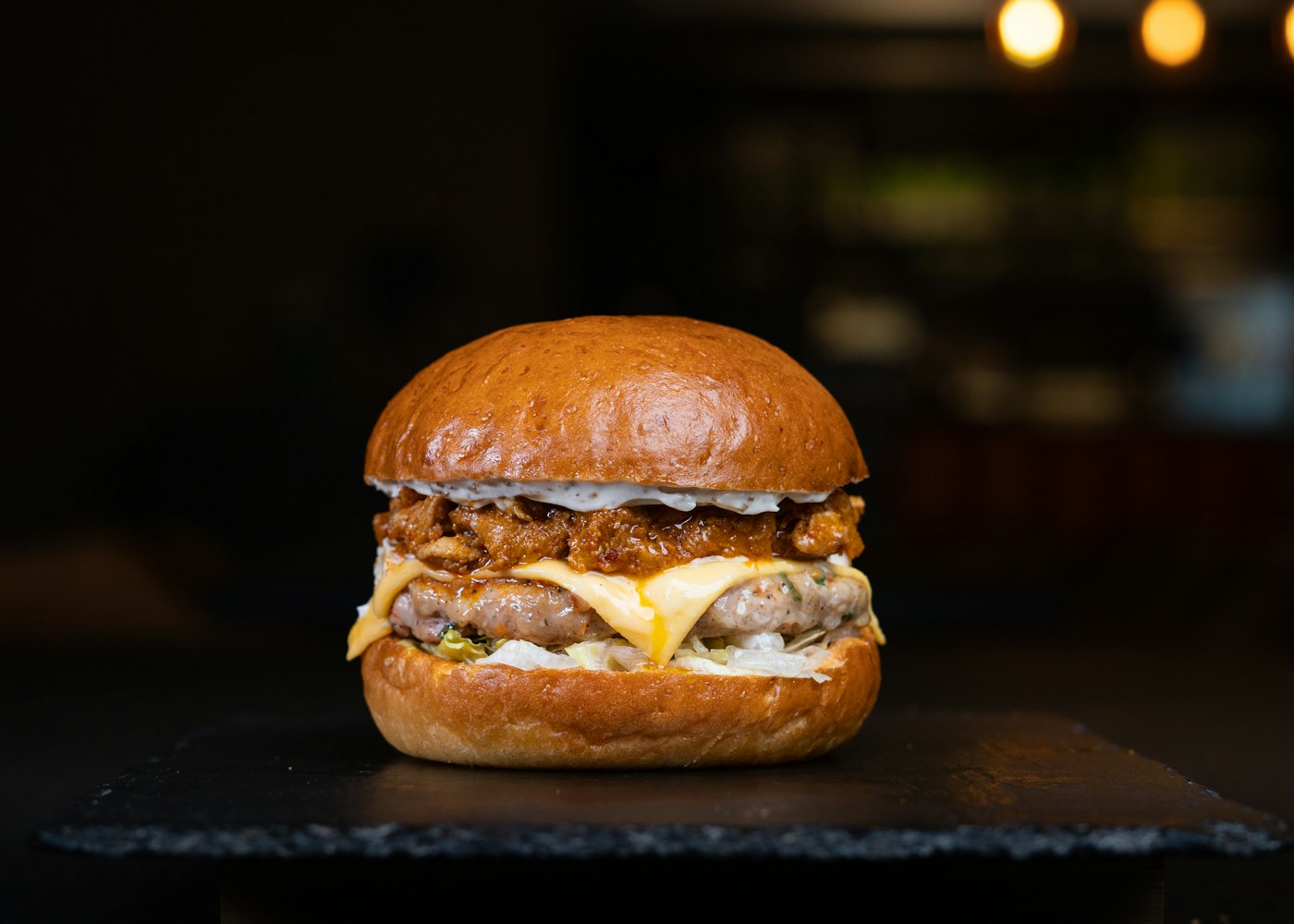
A wagyu burger is worth it if you love a very rich, buttery, extra-juicy burger and you cook it in a way that takes advantage of all that fat. If you just want a great burger, a well-made 80/20 chuck patty gets you most of the way there for less money, because grinding erases much of what makes wagyu special on a steak.
The bigger issue is knowing what you're actually buying. "Wagyu" on a package of ground beef can mean very different things, so here's how to read the label, how ground wagyu behaves in the pan and how to get the most out of it.
What "wagyu" actually means
Wagyu simply means "Japanese cattle." It refers to Japanese breeds that were developed over generations for heavy intramuscular fat, the fine white flecks of marbling running through the meat. U.S. labeling guidance recognizes four Japanese breeds as Wagyu: Japanese Black, Japanese Brown, Japanese Shorthorn and Japanese Polled. Japanese Black accounts for most of the famous, heavily marbled beef.
The key thing to understand is that the beef sold as wagyu in American grocery stores is almost always American Wagyu, not beef imported from Japan.
American Wagyu: fullblood, purebred and crossbred
American Wagyu comes from cattle raised in the United States. Most of it is crossbred, commonly wagyu crossed with Angus, which gives a beefier flavor and a bit less marbling than Japanese beef. The terms you'll see break down roughly like this:
- Fullblood: 100% wagyu genetics, with no crossbreeding.
- Purebred: at least 93.75% wagyu genetics, typically reached after several generations of breeding back to fullblood animals.
- American Wagyu (crossbred): cattle with verifiable wagyu parentage, often a wagyu crossed with Angus or another breed. Breeders sometimes describe crosses by generation, such as F1 for a 50% cross.
Those definitions come from the American Wagyu Association's specification, which USDA's Agricultural Marketing Service uses for its Wagyu live animal program. Breed claims like "Wagyu" also need label approval from USDA's Food Safety and Inspection Service, backed by documentation such as breed certificates. In practice, a package that just says "wagyu" without more detail doesn't tell you how much wagyu is in the beef, so look for terms like fullblood, purebred or a stated percentage if it matters to you.
Japanese A5 and how Japanese grading works
The "A5" you see on steakhouse menus comes from Japan's grading system, which is completely separate from USDA grades like Prime and Choice. A Japanese grade has two parts:
- A letter (A, B or C) for yield, meaning how much usable meat the carcass produces. A is the highest.
- A number (1 to 5) for meat quality, based on marbling, color and brightness, firmness and texture, and fat quality. 5 is the highest.
Marbling is scored on the Beef Marbling Standard (BMS), a 1 to 12 scale. Beef needs a BMS of roughly 8 or higher to earn a 5 for quality, so A5 means top yield plus top quality. Kobe beef is a specific regional brand of Japanese Black cattle from Hyogo Prefecture, not a general term for wagyu.
Japanese A5 is usually sold as steaks, not ground beef. If you see an "A5 wagyu burger," ask what's actually in the blend; it's often a mix with other beef.
How ground wagyu cooks differently
- It's very rich. Wagyu fat is softer and melts at a lower temperature than typical beef fat, so the burger tastes buttery and coats your mouth.
- It renders a lot of fat. Expect more grease in the pan and more shrinkage. See why burgers shrink.
- It's soft to handle. Keep the meat cold and form patties quickly so the fat doesn't smear. Our guide on how to form burger patties walks through it.
- It can flare up on the grill. All that dripping fat feeds open flames. A skillet or griddle gives you more control and lets the patty fry in its own fat.
Is a wagyu burger worth it?
On a steak, marbling is the whole show: you bite into fat that's laced through tender muscle. Once beef is ground, every burger gets its fat evenly distributed anyway, which is why a good 80/20 chuck already tastes rich and juicy. Wagyu ground beef pushes that richness further, but the difference is smaller than the gap between a wagyu steak and a regular one.
It's most worth it when:
- You want a special-occasion burger and like very rich, buttery beef.
- You're making smash burgers, where extra fat turns into crisp, lacy edges.
- You're blending it with leaner beef to stretch it further.
It's less worth it when you're loading the burger with heavy toppings and sauces that drown the beef, or when you're feeding a crowd. For everyday burgers, read how to choose the best ground beef for burgers.
How to get the most from wagyu ground beef
- Blend it. Mixing wagyu with lean chuck or sirloin keeps the richness without as much grease. Try ratios in our burger blend calculator.
- Smash it. Thin smash patties on a ripping-hot surface turn the fat into crust.
- Season simply. Salt and pepper right before cooking is plenty. More ideas in how to season burgers.
- Keep toppings light. A slice of cheese, pickles or onions and a soft bun let the beef stand out. See the best buns for burgers.
- Still cook to 160°F. Premium ground beef follows the same rules as any ground beef. USDA recommends cooking ground beef to 160°F, checked with a thermometer.
Curious about the other big premium option? Read dry-aged beef burgers, explained.
FAQ
Is American Wagyu real wagyu?
It has real wagyu genetics, but most of it is crossbred, often with Angus. Fullblood and purebred American Wagyu have much higher wagyu percentages than a typical cross.
What does A5 mean?
A5 is the top grade in Japan's system: A for the highest yield and 5 for the highest meat quality, which requires very heavy marbling. It applies to Japanese beef, not American Wagyu.
Is Kobe the same as wagyu?
All Kobe beef is wagyu, but most wagyu isn't Kobe. Kobe is a specific brand of Japanese Black cattle from Hyogo Prefecture.
Can I cook a wagyu burger medium-rare?
USDA recommends 160°F for all ground beef, wagyu included, because grinding can spread surface bacteria through the meat. Read is a medium-rare burger safe for the details.
Hungry for more?
Find great burgers near you or cook one tonight.