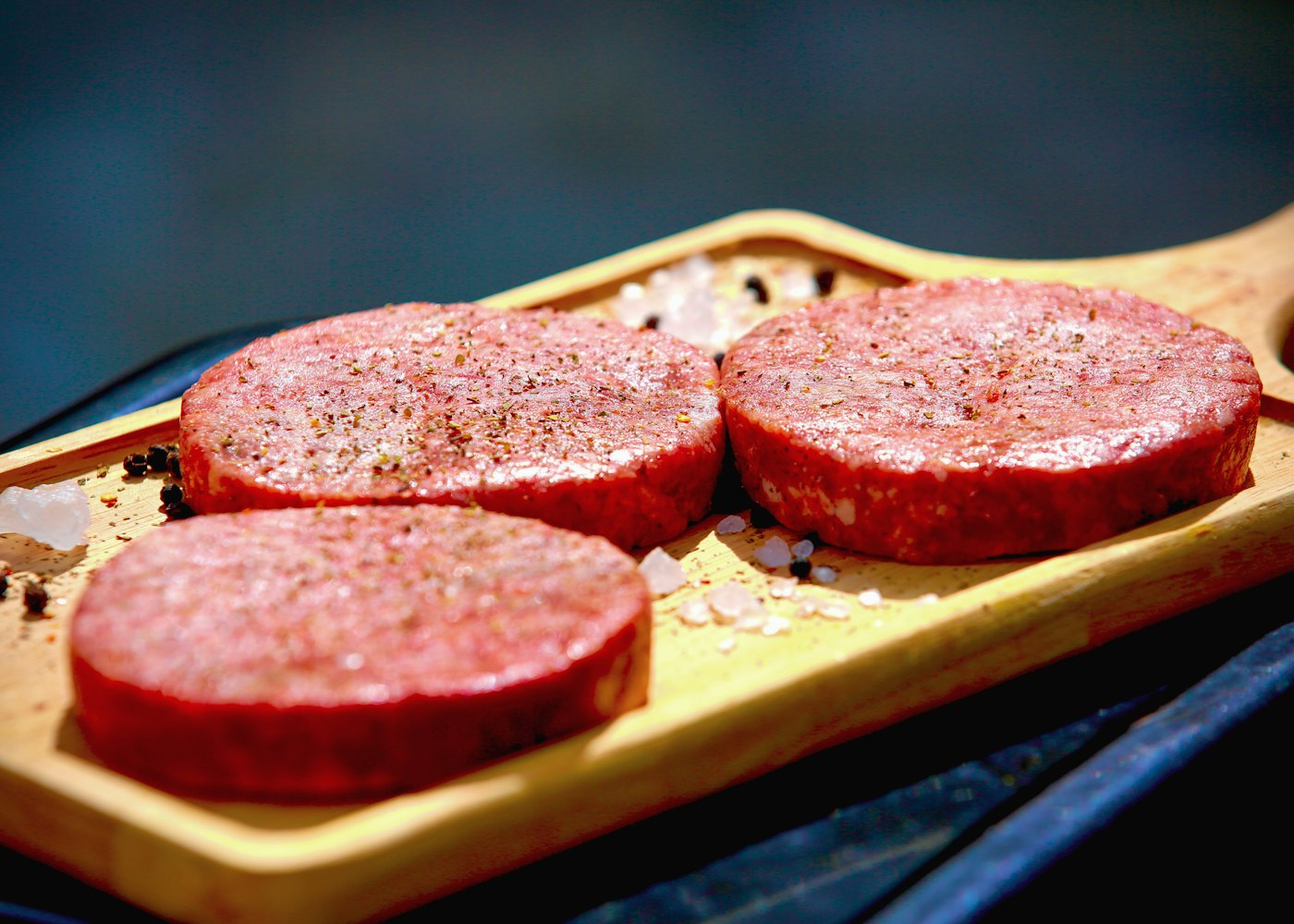
Burgers usually turn out dry for one of four reasons: the beef is too lean, the patty is overcooked, the meat was overworked or packed too tightly, or the patty was pressed while it cooked and the fat squeezed out. Fix those four things and most dry burgers become juicy ones, without giving up on food safety.
The good news is that none of the fixes are complicated. Below are the most common causes, how to spot which one is hurting your burgers, and what to change next time.
1. Your ground beef is too lean
Fat is where most of a burger's juiciness and flavor come from. As the patty cooks, fat melts and bastes the meat from the inside. Lean blends like 90/10 or 93/7 have very little fat to work with, so they dry out fast, especially once they reach a safe internal temperature.
- Best all-around choice: 80/20 ground chuck, which has enough fat to stay moist on a grill or skillet.
- Good middle ground: 85/15 if you want a slightly leaner burger and you're careful with cook time.
- Use with caution: 90/10 and leaner, which work better with add-ins or a sauce.
Our guide to the best ground beef for burgers goes deeper on cuts and fat ratios, and the burger blend calculator helps if you want to grind your own mix.
2. You're overcooking them
This is the biggest cause of dry burgers. A patty that sits on the heat well past done keeps pushing out moisture and rendering fat. Thin patties are especially easy to overshoot because they can go from done to dry in a minute or two.
The USDA's safe minimum internal temperature for ground beef is 160°F. The goal is to reach 160°F and then get the burger off the heat, not to cook it to 175°F "just to be sure." An instant-read thermometer is the only reliable way to hit that target; color and cooking time alone can fool you. Some people choose to eat burgers cooked to lower temperatures, but that's a personal risk choice, and our article on whether a medium-rare burger is safe explains why.
A basic instant-read meat thermometer is one of the cheapest upgrades you can make. Check the center of the thickest patty from the side, and start checking a minute or two before you think it's done.
3. You're overworking or packing the meat
Ground beef that gets kneaded, squeezed or mixed for a long time turns dense and springy. A tightly packed patty holds less of its juice and can cook up tough and dry even when the temperature is right.
- Keep the meat cold and handle it as little as possible.
- Divide it into portions, then gently shape each one into a loose ball and press it into a patty.
- Stop as soon as the edges hold together. A few cracks at the rim are fine.
- If you're mixing in seasoning, scatter it over the meat and fold just until it's distributed.
Our guide on how to form burger patties covers sizes, thickness and the thumbprint trick that helps patties cook evenly.
4. You're pressing the patties while they cook
Pressing a regular, thick burger with a spatula as it cooks squeezes juice and melted fat right into the fire or pan. That sizzle you hear is moisture leaving your burger.
The exception is a smash burger. With a smash burger, you press a cold ball of beef flat in the first 30 seconds or so, before much fat has melted, to build a deep crust. After that first smash, leave it alone. If you love that style, see our smash burger vs. regular burger guide.
Other reasons burgers come out dry
Heat that's too low
Cooking over low heat means the patty spends longer on the grill or in the pan before it reaches 160°F, so it has more time to lose moisture. Medium-high heat builds a crust and gets the inside cooked in less time.
Patties that are too thin
Very thin patties (other than smash burgers cooked hot and fast) overcook easily. For a classic grilled burger, about 3/4 inch thick is a good target. Check our burger grilling time chart for timing by thickness.
Flipping and poking too often
Flipping a few extra times isn't a disaster, but stabbing patties with a fork or cutting into them to check doneness lets juice run out. Use a thermometer instead.
Lean or poultry burgers without help
Ground turkey and chicken are naturally lean and must reach 165°F, so they're prone to dryness. Add moisture with grated onion, a little olive oil or mayo, or finely chopped mushrooms. Our juicy turkey burger recipe shows how.
Pre-made frozen patties
Frozen patties are convenient, but many are thin and some are lean. Cook them from frozen over medium heat and use a thermometer so you don't overshoot.
How to make juicier burgers next time
- Buy 80/20 ground chuck.
- Keep the meat cold and shape patties gently, about 3/4 inch thick, with a slight dimple in the center.
- Salt the outside right before cooking.
- Preheat the grill or pan to medium-high.
- Don't press regular patties as they cook.
- Start checking the temperature early and pull the burgers when they reach 160°F.
- Rest them for a couple of minutes while you toast the buns.
Want the full method? Read our guide on how to make juicy burgers.
Can you fix a burger that's already dry?
You can't put the moisture back, but you can make a dry burger much more enjoyable. Melt a slice of cheese on top, add a generous swipe of sauce like our easy burger sauce, pile on juicy toppings like tomato and pickles, and toast the bun with a little butter. Grilled onions or a fried egg help too.
FAQ
Why are my burgers dry even though I used 80/20 beef?
The most likely culprit is overcooking. Even fatty beef dries out if it cooks far past 160°F. Packing the patties tightly or pressing them on the grill can also squeeze out juice.
Does salting burgers early make them dry?
Mixing salt into the ground beef well before cooking can make the texture firmer and more sausage-like, which many people read as dry. Salting just the outside right before cooking avoids that.
Should I add breadcrumbs or egg to keep burgers moist?
Not for beef burgers made with 80/20 chuck. Binders are more useful for lean meats like turkey. For beef, fat and careful cooking matter more.
Do burgers need to rest?
A short rest of a couple of minutes helps the juices settle a little and gives you time to toast the buns. It won't rescue an overcooked burger, though.
What temperature should a burger be so it's not dry?
The USDA safe minimum for ground beef is 160°F. Take burgers off the heat as soon as they reach it rather than letting them keep cooking.
Hungry for more?
Find great burgers near you or cook one tonight.